

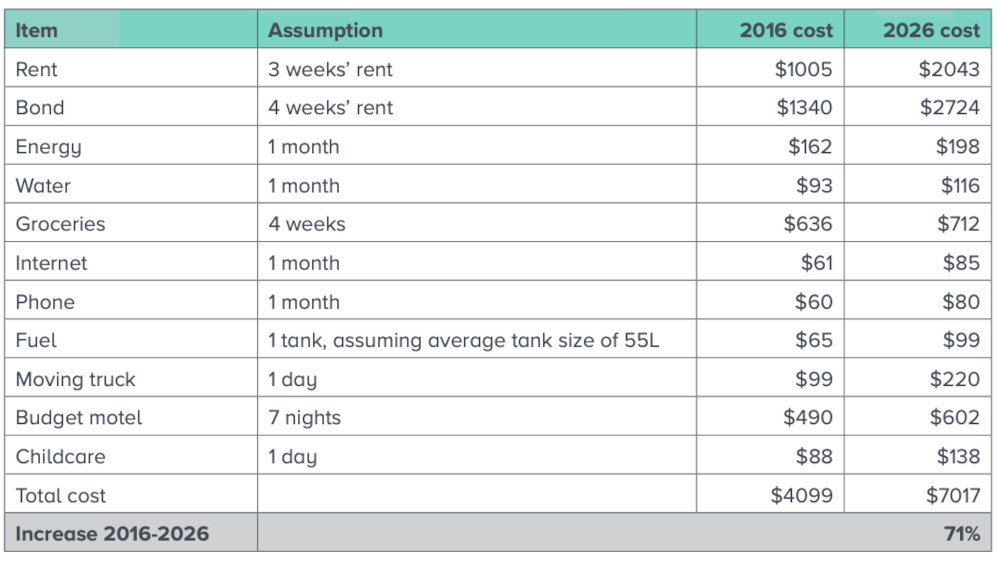
Fleeing domestic violence has got harder over the last decade, according to research by Anglicare Sydney The immediate costs of leaving, such as securing housing and temporary accommodation, and the follow-on costs of rebuilding a household and establishing safety afterwards, have risen by a minimum of 71 per cent over since 2016, outpacing a CPI index rise of 37 per cent.
The word “minimum” is significant. The report’s authors note their “report focuses on common and unavoidable costs associated with leaving violence, including housing, utilities, transport, communication, temporary accommodation, legal costs, childcare, and essential household goods. It does not attempt to capture every individual circumstance or the broader emotional and psychological impacts of violence.”
Rises in rent, legal fees, cost of basic replacement white goods (kettle, toaster, fridge, microwave), are quantified in the report, but they may not be the most significant barrier to leaving.
“Leaving violence often requires extraordinary social, emotional, and financial resources. This report focuses on the practical and financial barriers that can delay or prevent people from reaching safety.
“A lack of accessible financial support can be a major deterrent to leaving. Many people do
not have access to savings, independent bank accounts, or suitable lines of credit to cover urgent expenses such as bond payments, transport, temporary accommodation, or replacing essential household goods.
“Existing support schemes can also be difficult to access quickly, particularly where residency or eligibility requirements apply. Fear of financial repercussions, including shared debts, leases, mortgages, or damaged credit histories, can further discourage people from leaving unsafe situations.
“Financial abuse is a common feature of domestic and family violence and can continue to affect victim-survivors long after separation. Coercive control may involve debts being accumulated
“in a victim-survivor’s name, forced financial dependence, damaged credit histories, or restricted access to bank accounts and financial information. These impacts can make it significantly harder to secure housing, access credit, obtain utilities, or establish financial independence after leaving violence.
“The logistics of leaving violence can also be overwhelming. Many victim-survivors must plan around the movements or surveillance of an offender while organising a move, attending appointments, arranging childcare, and finding somewhere safe to stay. Concerns about leaving pets behind, visa and immigration insecurity, and a lack of practical support during relocation can all act as additional deterrents.
Recommendations in the Anglicare report include:
• Increase the value of the Leaving Violence Program, currently capped at $5,000 ($1,500 cash and $3,500 in goods and services), to $7,000 to better reflect the contemporary costs of leaving violence and index future increases to CPI
• Expand brokerage funding available to frontline services to cover:
bond assistance
whitegoods and essential household items • transport and relocation costs
temporary accommodation
pet boarding
childcare support
• Fund 3,000 additional long-term social and affordable homes annually dedicated to people leaving domestic and family violence
•Establish priority social housing pathways for victim-survivors