
Pew Research’s predictions for 2070 in their Future of World Religions Report come with a big surprise. Levels of fertility will cause the Muslim population to outpace Christians, which has been forecast for some time. But those without religion will decrease.
Pew details the change: “The world’s total population is projected to increase by 29% between 2020 and 2070. Muslims and Christians are the only religious groups analysed here that are expected to keep pace, with Christians growing by 30% and Muslims by 80%.

But those of us in Western countries should not be reassured. The decline in religious nones will occur mostly in China: “China’s total population is expected to shrink dramatically by 2070. Consequently, even though about nine-in-ten people in China are expected to remain religiously unaffiliated during this period, the number of “nones” in China is projected to decrease by 361 million between 2020 and 2070.”
“Although the global population of religiously unaffiliated people is projected to decline, the number of countries where they form majorities is expected to rise by three – South Korea, France and the United Kingdom – to reach 13 countries in 2070.”

Pew’s summary predictions for 2070 show that significant parts of the world remain predominantly Christian, but Australia is a greyed-out zone. Interestingly, Aotearoa New Zealand has slipped into the dark grey majority-religious nones zone.

And the shift to Africa being the centre of world Christianity remains a Pew prediction, fuelled in part by Africa being a centre of population growth. Pew predicts “Christians are expected to be the majority religion in most countries in 2070, as they were in 2020. However, the number of Christian-majority countries is expected to drop from 120 to 110 over this time span. If recent trends continue, the U.S., Canada and Germany are among the countries that will no longer have Christian majorities by 2070.”
Christianity will be much less of a Western religion, and much more an African one.

Fertility is a key factor in the Pew predictions: “Muslims have the highest fertility rate, at 3.1 children per woman (as of 2020-2025), followed by Christians (2.5), while the Jewish fertility rate matches the global average (2.3). Collectively, women in the “other religions” group – an umbrella category composed of people who identify with religions other than the major groups in this study – have about 2.1 children per woman. The remaining groups have fertility rates too low to sustain their populations in the long term.”
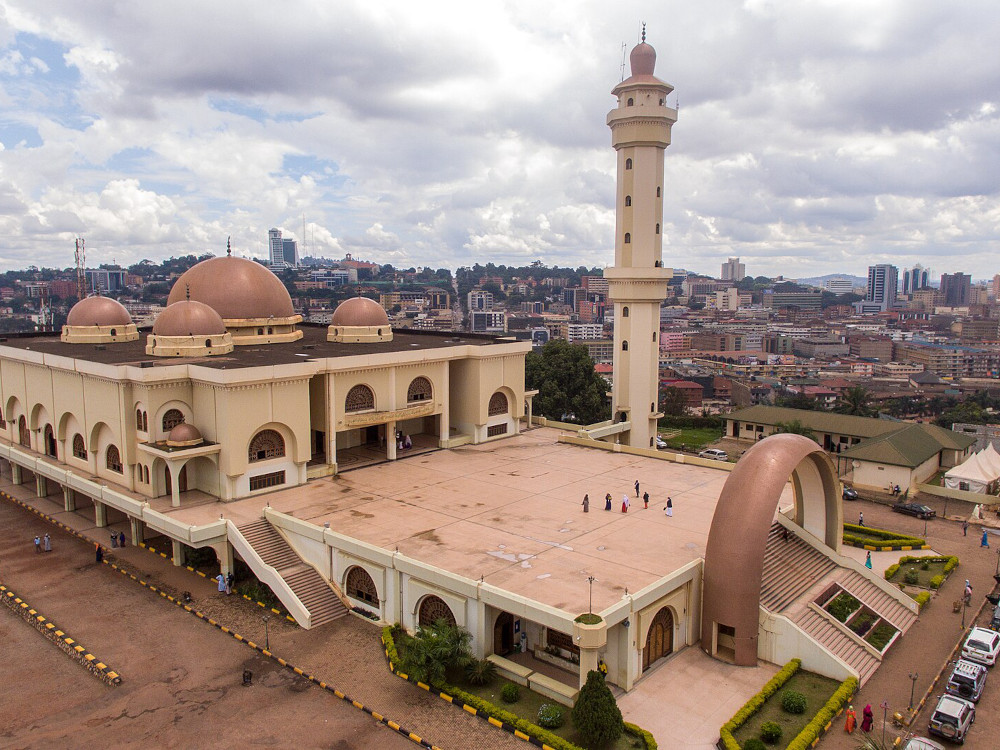
Main Image: Uganda’s National Mosque. Image Credit: Tusk Media, Creative Commons