
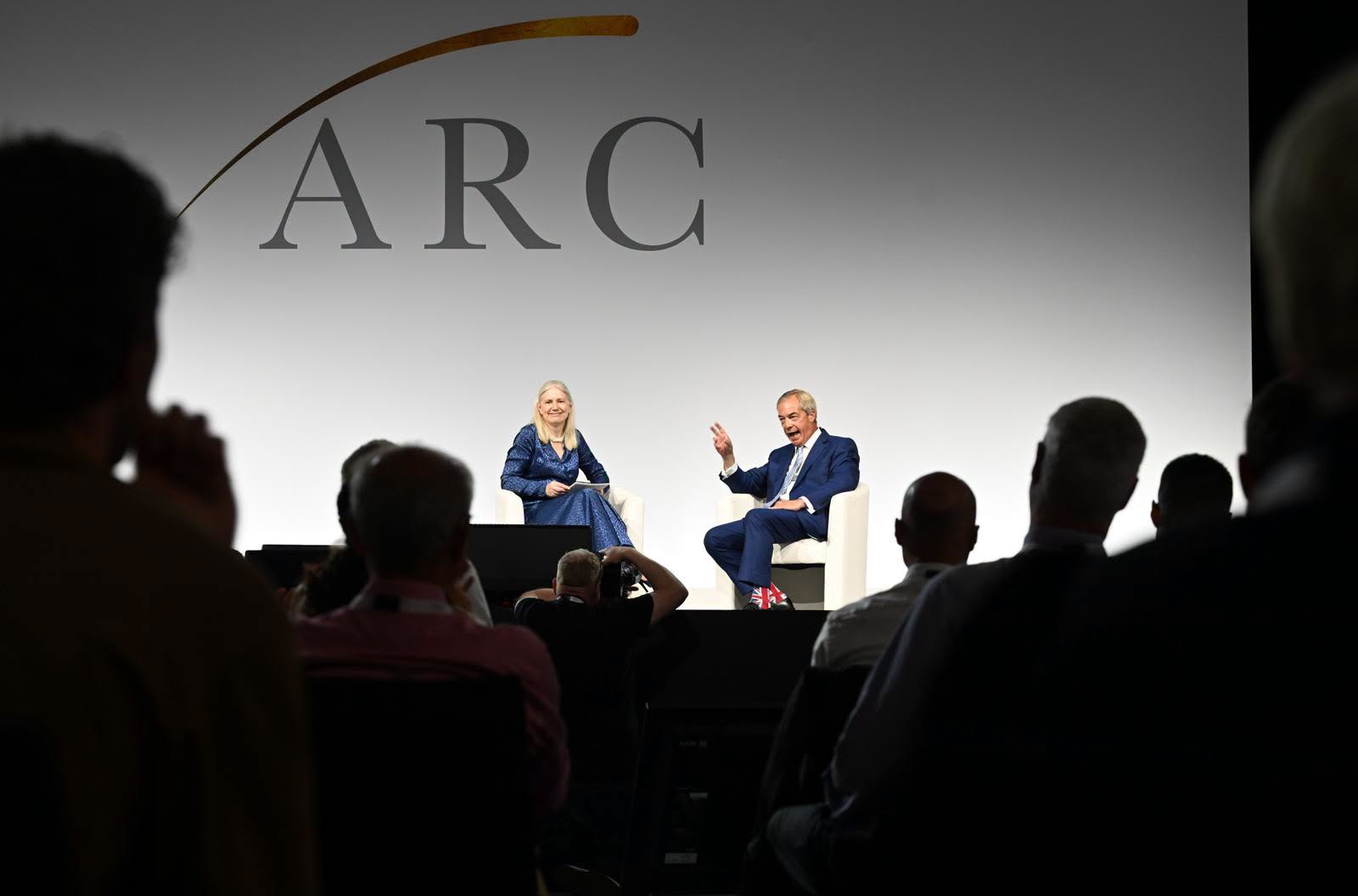
Stephen McAlpine, public theologian and author, has attended the conservative ARC (Alliance for Responsible Citizenship) conference in London and, unlike others, has come back in two minds.
He appears somewhat sympathetic to the “rebuilding the west” theme that ARC runs with, but makes a very important point, questioning the ultimate value of such a gathering.
McAlpine, on his substack, asks: “If the culture does not exactly return to Christianity, is ‘Christian adjacent’ a good enough landing spot instead? Is an inculturated, broad, general approval good enough?
“I reckon we’d take any port in a cultural storm at the moment. But what would that look like? Should we settle for it – again?”
We could debate whether we need a cultural port in a storm – McAlpine agrees with ARC’s main point that the West needs reconstructing.
But McAlpine is too much of a theologian to be satisfied with that. He has a key conversation with Rod Dreher, author of The Benedict Option. Dreher wrote that book advocating for Christians to develop strong communities with a strong culture to shelter in, when he was a very pro-Trump person. But he has since broken with the general MAGA movemnet warning about a “woke right”. (The emergence of the word woke to criticise the right should be noted.) So McAlpine’s account is a useful update on Dreher.
“That was where my question to him was going. Is it good enough in the West to say that the Christian ideas are good ideas that work, rather than good news that happened and has implications?
“Rod says not on your life! His latest work is focusing on the hard push to the fascist right among young men in particular in mainstream political life in the USA.
“And he attributes that in part, in my understanding, to the forms of godliness without its power. Oh there’s power alright, it’s all that is left, isn’t it? Isn’t that what Foucault would tell us? Isn’t that what the progressive Left, in its deadly dancing death spiral with radical Islam, is all about?”
Near-belief, the Tom Holland style is not enough.
In ARC, it seems to this writer, we have a new Liberation theology, only for conservatives.
In early forms of Liberation theology, Christianity was closely tied to a particular method of social project in Latin America. In its more Marxist form, it failed on both levels of improving the conditions of the poor and failing to renew the vitality of the church.
McAlpine is prescient in picking up that ARC may have the same issue, of Christianity being subsumed by an ideology.
ARC has another issue – it is a top-down project funded by uber-wealthy people like Sir Paul Marshall, co-owner of GB News, and the billionaire owners of the Legatum investment group. Liberation theology actually began from the grassroots, a more Christian way to work.
However, this writer is attracted to anyone who comes away from a room of enthusiasts with the reaction – “Hang on, there’s something you are missing.”
Especially when the missing thing is the Gospel.
So Stephen McAlpine is right. He would also be right, of course, if he had been in a room with a keen lefties who also leave out the gospel.
Christians will never fit neatly into political alliances. Because we are citizens of heavenand howver many earthly passports we have, that will come first.
This is not to deny that the gospel powerfully reforms society. The oft-cited example of Wesley’s revival helping England survive the trauma of the industrial revolution by uplifting the poor of the new cities and the country alike is strong evidence of that.
Millions of people are becoming Christians in our contemporary world. There are more Christians alive today than ever before. That will have a massive effect on the cultures and equality in the Global South. But this rebewal are breaking out in places seriously under-represented at ARC. It’s just that God really does have a preferential option for the poor – and yes, that statement was first heard from Liberation Theology, but strongly endorsed by Catholic Social teaching, and yes, Methodism.
Drawing that parallel to a “conservative liberation theology” is a sharp observation it highlights the risk of religion just becoming a tool for political or ideological projects rather than something that stands on its own. Definitely a sobering read for anyone wondering about the intersection of faith and the current cultural climate. visit us at Telkom University Jakarta for the latest news