
Charles Brammall
When I first met my (Filippino) wife, I was surprised to discover she was Conservative Evangelical rather than Roman Catholic, the former a tiny minority in the “Land of a Thousand Islands” (actually 7641 islands).
Biblical Christianity has only been in her family for three generations. Before that they were staunchly Roman Catholic, apart from her grandmother, a Spiritist. What happened three generations ago to make the change?
Her grandfather, a devout Catholic, owned some land. The local Catholic priest asked if he would like to donate it, for a school to be built. He willingly did so, God fearing chap that he was, glad to add Works of Supererogation to his Purgatory-shortening bank account.
(“Works of Supererogation” in Roman Catholic theology are actions that go “beyond the call of duty”. That is, they are morally good, but not strictly required.) They are considered extra credit, though Protestant traditions reject the concept as eroding the finished work of Christ, impious, and ultimately arrogant. In a secular ethical context, examples include acts of extreme heroism, like the civilian who disarmed the gunman at Bondi yesterday, or acts of beneficence.
But when my wife’s grandfather donated the land, the school was never built. The priest had lied- he sold the plot and kept the money. Her grandfather, in his disillusionment, anger, and loss of trust, thought “Blow this!”, and promptly became a Methodist minister. Her family has been soundly Biblically Protestant ever since, Praise God in His mercy.
Prayer:
Loving King of all,
Please soften the hearts and educate the souls of those who follow Catholicism, indigenous traditions or explore spiritism in his land. We beg You to meet them with patience, light, and the gentle power of Your Spirit, so that their search for meaning leads to You. Please let their lives begin to honour You, and their zeal bring eternal hope to the weary
Amen.
Conservative evangelicalism in the Philippines is a small but resilient minority within a predominantly Catholic nation. While roughly 85–90% of Filipinos identify as Christian, the vast majority are Roman Catholics, with Protestants making up a modest proportion.
Within the Protestant community, Pentecostal and charismatic megachurches like Victory/Every Nation Christian Fellowship, Christ’s Commission Fellowship (CCF), and Word of Hope, are the largest, visible and most influential. They also include “Jesus Is Lord Church”, and “Bread of Life Ministries”.
Many of these churches have networks of hundreds of congregations, particularly concentrated in Metro Manila, Cebu, and Davao, one of the tourist beach meccas.
By contrast, conservative evangelicals— those holding to historic Reformation doctrines, expository preaching, (and in some cases cautious or cessationist views of supernatural gifts)- remain relatively small and scattered.
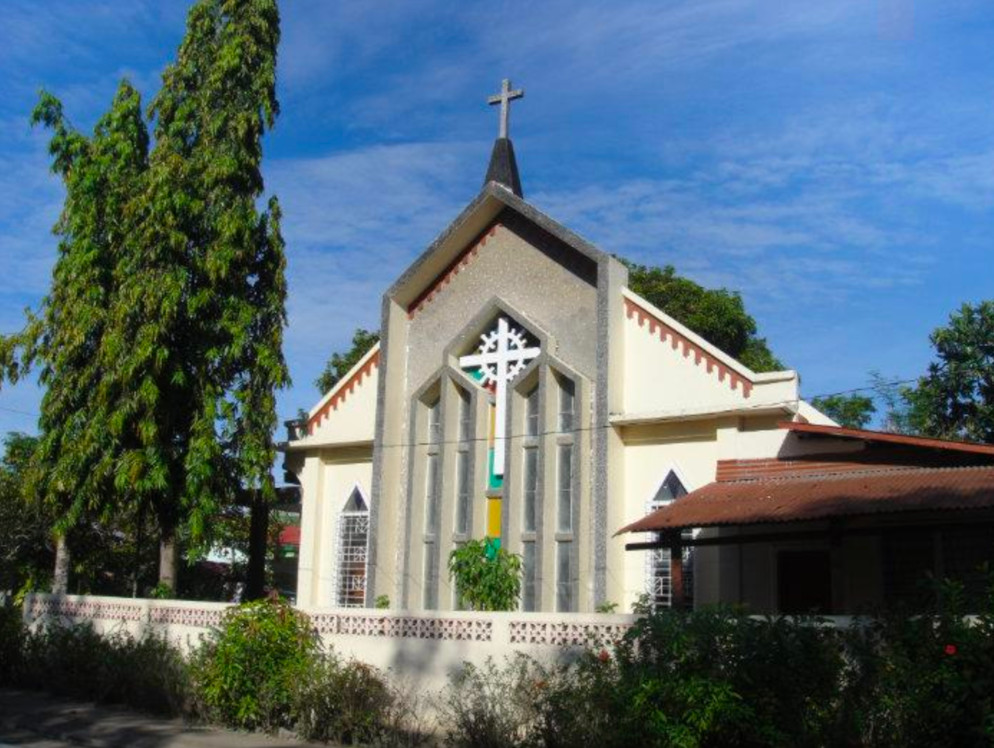
They include Baptist churches, especially Bible and Fundamental Baptist groups. Also Christian and Missionary Alliance congregations, and Brethren assemblies. Also Methodist, Independent congregations (like my wife’s, “Union Church Manila”), and Reformed/Presbyterian churches. But they remain tiny in comparison, and geographically separated..
A few seminaries, like the Asian Theological Seminary (ATS), International Graduate School of Leadership (IGSL), and Far Eastern Bible College Philippines, provide theological depth and international links.
Although even within these, a wide range of evangelical and charismatic influences exists, amongst students and even faculty- not unlike some of Sydney’s large Conservative Evangelical Colleges. (My cohort at one of the big conservative evangelical colleges in Sydney had a good handful of Liberish and Pentecostal students.)
Culturally, conservative evangelicals face challenges:
*The broader religious atmosphere in the Philippines is emotionally expressive, communally oriented, and pragmatic. These are traits often aligned more naturally with Pentecostal-charismatic spirituality than with restrained, doctrinally precise evangelicalism.
*The media and political presence of megachurch pastors dwarfs that of small conservative congregations.
*Many Filipinos associate “born again” faith primarily with Pentecostal or prosperity preachers, not with the older evangelical missionary tradition.
Still, conservative evangelicalism continues to contribute quietly to the advance of the Kingdom of light in the nation. This is also through Bible translation work (e.g. Bible Resources for the Blind, Philippine Bible Society). Also university student work (Navigators, InterVarsity), and mission sending. As well, discipleship training movements.
It remains a minute but faithful remnant, often overshadowed by the Pentecostal megachurch boom, yet deeply committed to Scripture, theological integrity, and Christ-centered mission.
In contrast, the Megas literally attract millions.The largest is the “Jesus is Lord Church Worldwide”. One source reports an alleged membership of about 4 million in around 2023.
They blend dynamic “worship”, and personal experience with entrepreneurial leadership. Usually with a hearty side of charismatic emphases, or a triumphalism/prosperity Gospel orientation.
This, in the same city as the infamous “Smokey Mountain” which smoulders on…
(Smokey Mountain is a gigantic landfill in Tondo, Manila, existing for at least 50 years. It consists of over two million metric tons of waste. Entire families, including toddlers, the elderly, and unwell, live in, on and under it. From when they can first crawl, to when they are crippled with age, they eke out a meagre living sifting through the putrescent stink, toxic fumes, and glass shards. The human waste (even body parts), and infectious bio-waste- to find any even vaguely saleable items.
Years ago, the flammable substances in decomposing waste led to fires that resulted in many deaths. It was the home of 30,000 people, who made their living picking through the landfill’s rubbish.
And over 20 million Philippine people live in slums. In Manila alone, 50% of the 11+ million inhabitants dwell in these areas. In 2000, a landslide at a similar dump to Smokey killed over two hundred scavengers.
Conservative evangelical churches and individuals are involved in much community service and many social charities there. But the prosperity and triumphalist Gospel marches on undaunted. (See Don Carson’s “From Triumphalism to Maturity”, a splendid commentary on 2 Corinthians 10-13.)
Philippine Evangelicals’ distinctive commitment is to Scripture-centred faith, expository preaching, and doctrinal fidelity. It often eschews the flashier, experience-focused style of Pentecostal megachurches.
Many Filipino conservative evangelical churches have adopted Biblical-theological preaching models. They trace the unfolding story of redemption/salvation history/God’s dealings with humankind across Scripture, correctly finding Christ, in some way, in every OT passage.
Australian scholars like Archbishop Donald Robinson and Graeme Goldsworthy have influenced Philippine Evangelicalism in this way- particularly Goldsworthy with his framework of Creation, Fall, Redemption, and Consummation.
This hermeneutic is now evident in Philippine Bible colleges, preaching workshops, and congregational teaching, giving pastors tools to integrate passages into a coherent redemptive narrative.
Biblical Christianity’s origins in the Philippines are encouraging. It took root during the country’s American colonial period (1898–1946). American Protestant missionaries, Baptists, Presbyterians, Methodists, and Christian and Missionary Alliance workers, introduced evangelical theology and institutions. My wife’s church still regularly has US Senior Ministers. However early efforts were often more mainline than doctrinally conservative.
Independent conservative missions and parachurch organisations, such as Brethren missionaries, laid the foundations for Bible colleges and seminaries, forming the basis of Filipino-led evangelicalism.
After independence, postwar mission agencies such as Youth for Christ, Navigators, InterVarsity Christian Fellowship, and OMF expanded campus evangelism and discipleship. By contrast, Pentecostalism grew explosively in the 70s and 80s, especially through the Jesus Is Lord Church and the Assemblies of God.
This appealed to the affective, expressive, emotional Philippine (partly Spanish) religious culture, with its love of community and experience. It has been said this comes from their combined Indigenous/Spanish/American/SE Asian roots. Philippine’s own affectionate moniker for themselves is the “Mexicans of Asia”, due to their strong Spanish influence.
Please pray with me for Philippine Conservative Evangelicals, Pentecostals, Catholics, and those practising indigenous spirituality:
Our Gracious God and loving Heavenly Father, Lord of Heaven and Earth,
Thank You for creating, providing for, loving, and sending Jesus to die for, every Filipino.
Please continue caring for them- those who live in the mountains, on the seas and rivers, and in the cities.
In slums and in mansions.
Also in the provinces, and especially Mindanao, the majority Muslim region.
For the sake of the international name of Jesus,
Amen.
Today, conservative evangelicals remain a minority— maybe 5–10% of non-Catholic Christians. But they faithfully maintain rigorous theological training, mission focus, and Scripture-centered ministries. Seminaries such as Asian Theological Seminary (ATS)and Far Eastern Bible College emphasise exegesis, systematic theology, and Biblical theology.
Many churches prioritise exegetical preaching, following the Robinson/Goldsworthy-inspired Biblical-theological approach. They carefully trace the redemptive arc of Scripture and the OT typology and tropes of Jesus rather than relying on topical, allegorical, or motivational sermons.
This commitment contrasts with the more pragmatic and experiential style of Pentecostal megachurches, but ensures that conservative Evangelicals provide love, truth, and the unabashed cruciform gospel. Also service of God and others, deep theological formation, disciplined discipleship, and a coherent gospel witness.
Despite their smaller numbers, they play a crucial role in nurturing pastors, missionaries, and Christian educators, quietly shaping the theological landscape of Philippine Protestantism.
Please pray with me for the Philippines:
Dear God,
Please bless the conservative evangelicals in the Philippines with humility, teachability, and empathy. Also faithfulness, gentleness, and love for their Pentecostal brothers and sisters, and Catholic friends and family. Please give them courage; and let their words, hearts and lives echo Your truth, and reflect Your mercy.
Amen.
Dear Father,
Please guide Pentecostals and charismatic Christians there, that they would give You Your true worth with all their lives.
Amen
Dear Lord,,
Please nurture and feed Catholic Philippines dear Father; and ignite, inform, and deepen their love for Jesus and their neighbour. We beg You to draw them closer to Your living presence.
Amen.
Great LORD,
In all faiths and practices, please let Your love, Truth and repentance shine, uniting hearts in humility, peace, and wonder at Your glory. May the death of Christ become the only heart of the Gospel in that land.
Amen,
Mighty King,
Please enable every Filipino, living and future, to know the truth, joy, and life found only in Jesus Christ, our Lord and Saviour.
For the magnification of His ruling Name in that land,
Amen.
Dear Heavenly Father and creator of the 7641 Philippine islands, and its 116.8 million people,
You made them in Your image, and You love them.
Please be at work by Your Word and Your Spirit in the hearts of every person living there, and in its diaspora.
We beg You to bring a great and mighty awakening to this land.
In Jesus’ eternal all-powerful Name,
Amen.