
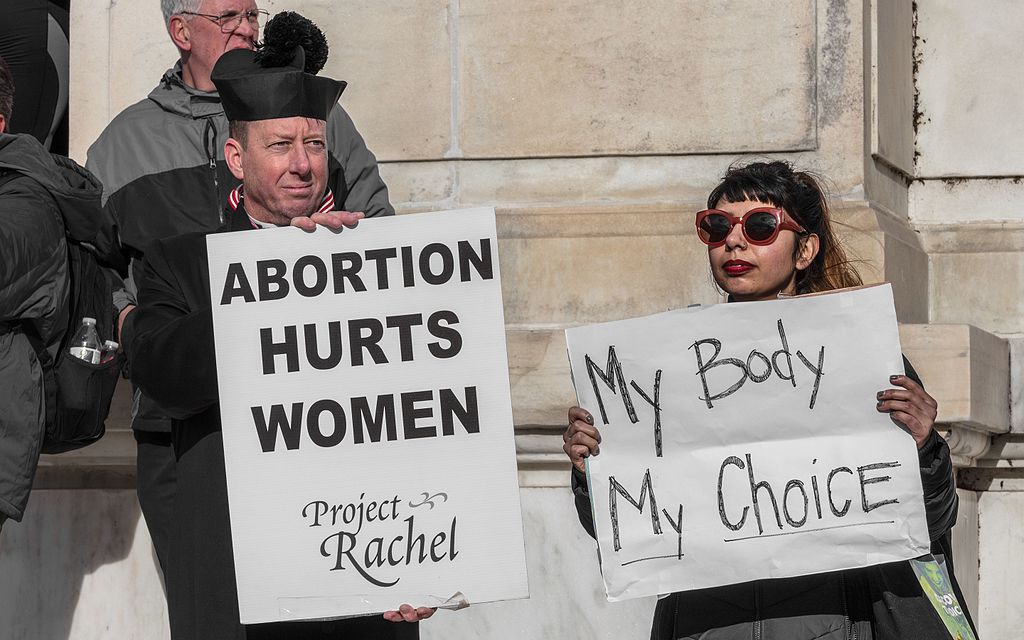
The unexpected consequence – unexpected to pro-life campaigners – of increased numbers of abortions in the US after the Supreme Court overturned Roe v Wade and the imposition of abortion bans in 13 states and strict limits in six others, has continued.
But a court case restricting access to the abortion drug mifepristone, requiring patients to visit a health care provider in person to obtain the medication, may yet interrupt this pattern. The decision last week by the U.S. Court of Appeals for the Fifth Circuit, based in New Orleans, Louisiana, was immediately appealed to the Supreme Court, which has allowed distribution of the pill to continue at least for now.
Stats from the Guttmacher Institute, a pro=choice organistion with a reputation for accuracy, show that the increased number of “clinician-provided abortions” was stable to the end of 2025. This is a measure of on-site and telehealth abortion. Self-administered abortions don’t appear to be measured and would be difficult to measure.
“There were an estimated 1,126,000 abortions provided by clinicians in the United States in 2025, largely unchanged from the estimated 1,124,000 provided in 2024,” Guttmacher reports. “This is the highest number of abortions provided in the United States since 2009; however, it is still well below the historical peak of slightly over 1.6 million abortions in 1990.

The effectiveness of the state bans is demonstrated in stats collected by KFF a health policy organisation in the US.

Pro-life supporters can count these bans as a success, but the overall number of abortions in the states remains higher than before Dobbs and is leveling out at this higher rate rather than declining
Main image Credit: James McNellis Wikimedia