
Peter Farthing defends his suburb – and his church
‘It doesn’t look like Australia.’ So said a documentary on the Sydney suburb of Auburn, released this week on the generally fine John Anderson Media. Watching it, I felt very disappointed.
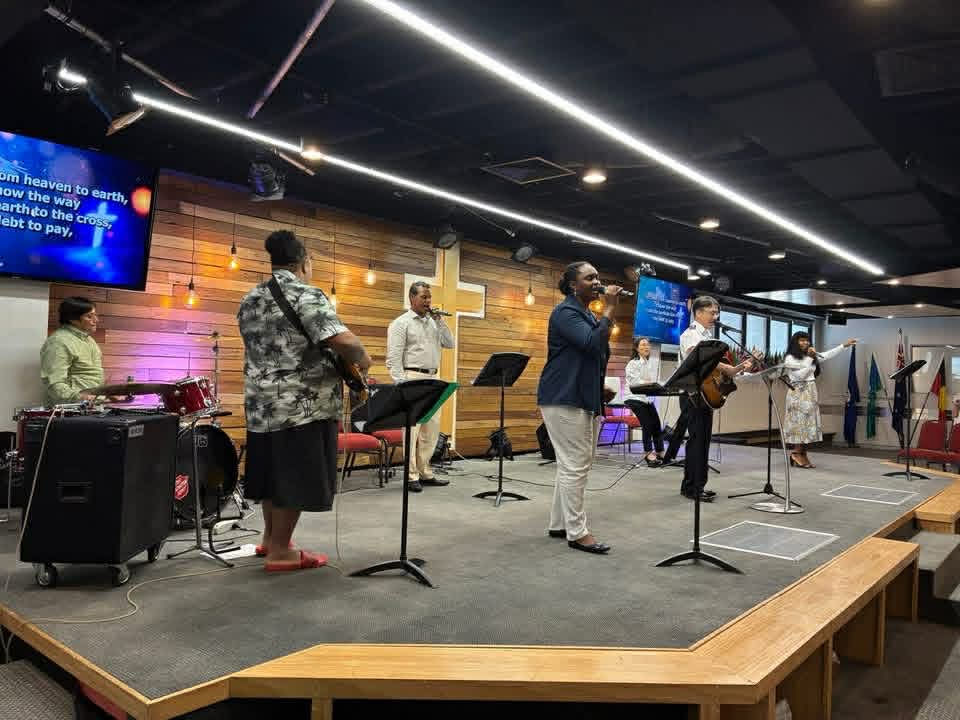
Then this morning, I walked into our Salvation Army church at Auburn—during the week, hundreds of community members visit every day. And in the foyer, I was greeted by four African-born men, all strong Christians. They came to Australia as refugees or asylum seekers, and all are either proudly Australian or desperate to be.
The next people I met were two Fijians. I took a seat, looked to my right to see James and Georgie and their three kids—a Chinese family. Melida from Uganda, dressed in African clothes and headwear, grabbed my arm, hugged Kerrie, then sat beside her. Melida is unusual in that she speaks little English, yet we usually sit together and are friends.
The worship commenced, not with our usual songs, but with an old one, ‘This is the day.’ When we finished, the two Fijians in the band, both great singers, spontaneously sang it in Fijian. Not to be outdone, our Korean students, Tae-ho and Grace, great musicians, sang it in Korean. Then Oke led on in worship—Oke was born in Nigeria. Kamara, beside her, has heritage in Sierra Leone, I think.
Soon, the drummer for today, who is Nepalese, led us in prayer.
It is Pentecost Sunday, and one of our church leaders, Adrian, born in South Africa, reminded us that when the Holy Spirit was given, all the Jesus people could suddenly speak the languages of visitors to Jerusalem. He got us to go around the hall, greeting each other in our first languages. ‘Hujambo!’ Kerrie said to Melida, who smiled. ‘Merhaba,’ I said to Ozer from Turkey. ‘G’day,’ I said to blonde Natalie.
You get the picture.
I understand if you live in the bush or in a monocultural corner of Australia, then Auburn would feel foreign to you. I understand that if you are an old boomer like me, but have limited experience of a place like Auburn, it would surprise you.
But can I say two things?
First, this is Australia. It might not be like where you live, but for those of us in Western Sydney, this is modern Australia.
Second, this is today’s Christian church. Our sergeant major (lead elder) Joseph Sesay spoke before the offering. He speaks as a man of God, with a quiet authority. I wish every church had ten men like Joseph.
Pentecost Sunday: a good time to celebrate the richness of a diverse church and nation.
I lived in Berala, next to Auburn, 1975-1984, and often why to Auburn on a Saturday morning to shop. We nearly always got home with still warm Turkish bread, which were buttered and ate around the dining table. It was already very multicultural.
So was Berala. The big supermarket was run by a Russian or Ukrainian couple who had sold up in Merrylands and bought the business, making it a combined pharmacy and general store. We shopped a lot at the delicatessen run by Greek brothers. Our GP was Filipino. We had lovely Chinese students from nearby Cumberland CAE (now part of Sydney Uni) in our church.
I started theological college and was eventually settled in Marrickville, where I stayed for 36 years. We had Filipinos all the time I was there, a pair of Greek sisters and, occasionally, their friends, several South Americans, a couple from Africa who both had doctorates and another African woman who moved after a short time with us. Jackie and a few other Kiwis came. One was multi talented, had an emergency appendectomy, and then had a breakdown and returned to NZ. We were all sad about that. We had a lot of Alawite Muslim kids in the Sunday School, and they and their parents always came to church picnics. We had visitors from Germany, Rolf and Regina, who were surprised to find a pastor who spoke German, and started when I dragged the congregation down to the local square to finish the service and not be stuck inside four walls.
The multicultural nature of the places I lived and the church I attended have been among the best features.
I lived in Berala, next to Auburn, 1975-1984, and often went to Auburn on a Saturday morning to shop. We nearly always got home with still warm Turkish bread, which we buttered and ate around the dining table. It was already very multicultural.
So was Berala. The big supermarket was run by a Russian or Ukrainian couple who had sold up in Merrylands and bought the business, making it a combined pharmacy and general store. We shopped a lot at the delicatessen run by Greek brothers. Our GP was Filipino. We had lovely Chinese students from nearby Cumberland CAE (now part of Sydney Uni) in our church.
I started theological college and was eventually settled in Marrickville, where I stayed for 36 years. We had Filipinos all the time I was there, a pair of Greek sisters and, occasionally, their friends, several South Americans, a couple from Africa who both had doctorates and another African woman who moved after a short time with us. Jackie and a few other Kiwis came. One was multi talented, had an emergency appendectomy, and then had a breakdown and returned to NZ. We were all sad about that. We had a lot of Alawite Muslim kids in the Sunday School, and they and their parents always came to church picnics. We had visitors from Germany, Rolf and Regina, who were surprised to find a pastor who spoke German, and started when I dragged the congregation down to the local square to finish the service and not be stuck inside four walls.
The multicultural nature of the places I lived and the church I attended have been among the best features.
That sounds like Heaven to me!
The lesson of Pentecost is that all are welcome and all races are part of God’s Kingdom and that is the model for modern Australia, our shared identity Jesus or Greek, slave or free.
Sorry Jews or Greek (my fat fingers)