
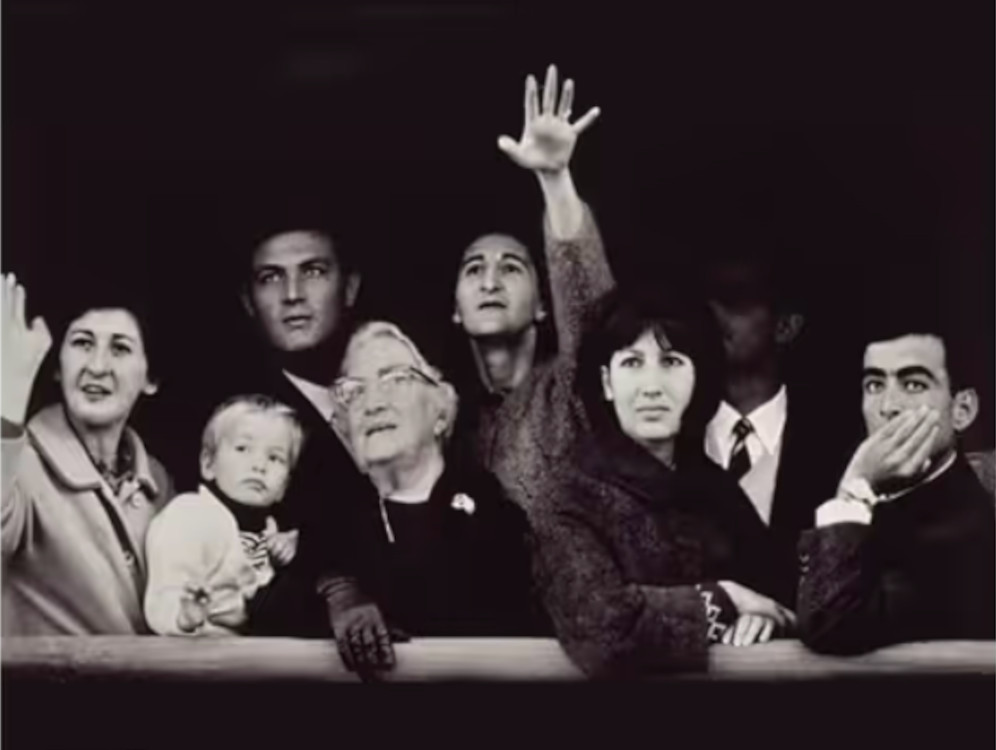
Multiculturalism is the word of the month thanks to the fractures on the right of Australian politics, and a new book challenges Christians to think through just how multicultural their church is willing to be. “The Multicultural Challenge to Sydney Anglican Identity” title precisely describes what author Mersina Papantoniou sets out to set out. There’s an extra, an extra layer to this book – Papantoniou is recounting battles within the Sydney Anglican Diocese’s Home Mission Society – later transformed into Anglicare Sydney. Her book traverses the evangelism/social welfare battles of the fin de siècle, contrasting the majority in the diocese who she dubs “purists,” in contrast with those who place social action within the mission of the church.
But The Multicultural Challenge has social engagement as one facet of a larger question: how well can a middle-class mostly white cohort of Christians engage with emerging or vulnerable communities?
There’s some classic lessons that should have been learned long ago in The Multicultural Challenge.
Anglicanism’s missed opportunities with the Sydney Chinese Community – quoting a speech by one of Papantoniou’s heroes, Bishop John Reid, she cites two inner-city mission churches for Chinese starting contemporaneously. The Presbyterian church had a Chinese minister of their own, the Anglicans’ “Chinese catechist licensed to an Anglo-Saxon Superintendent.” The Pressys ended up with the flourishing Crown Street Chinese Presbyterian Church. The Anglicans sank without a trace after a slum clearance program.
Apartheid: Loyalty to one’s own ethnic group is exemplified in Moore College’s Broughton Knox’s declaration that South Africa’s system of separate development was not sinful. Papantoniou reproached Bishop Frank Retief, leader of the Church of England in South Africa (now the REACH-SA church) apology to the Truth and Reconciliation Commission: “We had not made the connection between gospel and society …we allowed ourselves to be misled into accepting a political system that was cruel and oppressive. …Our failure to be involved in the political struggles of our land was a major error…”
Anglicare Sydney’s Department of Cross-Cultural Ministries, led by Papantoniou, planted Chinese congregations in churches across Sydney, and ran a network of ESL classes with local parishes. The work of Irene Mok as a church planter and Nancy Lewis in ESL is rightfully highlighted. This writer is certain that they will be recognised even more in the world to come.
Papantoniou reports “There were now two strategies for reaching the [Non English Speakers] between those who advocated “pure”‘” proclamation evangelism versus those who adopted an evangelism through a parish-based social welfare programs approach.” This tension seems strangely fraught viewed from decades later on, but most churches will still have to choose between worthy options.
The HUP – The Homogeneous Unit Principle was alive and well among church growth advocates in the eighties and nineties and echoes today. The idea is that churches grow faster if they consist of people of a similar background. The Multicultural Ministries team was battling the HUP, whether it was acknowledged as a deliberate strategy or if there simply was a dominant demographic in a church that discouraged others.
Eventually, the management culture of Anglicare changed and this meant that the multicultural team was defunded. Instead of the church planting and parish-based ESL work, Anglicare resourced a Migrant Services Department taking advantage of grants from the Howard government. Papantoniou’s fascinating analysis sees this as a shift towards a welfare model and away from a community development model. And also a shift away from an overtly gospel approach towards being a handmaiden of government.
Times have changed, and Anglicare is building back towards partnership with parishes – this book describes a past version of Anglicare. But the lost opportunities are well worth documenting.
Multiculturalism – and the more recent term Interculturalism – are back in focus. The church needs to avoid being wedged in the current political debate – we are not white bread. We are multicultural at our best, but still not multicultural enough.
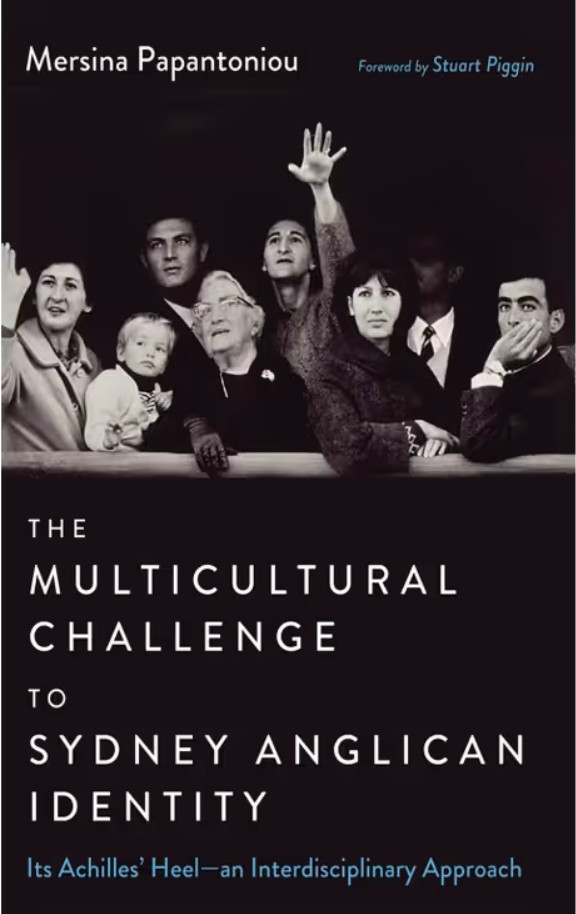
The Multicultural Challenge to Sydney Anglican Identity: Its Achilles Heel – An interdisciplinary approach. Mersina Papantoniou, Pickwick, Eugene, Oregon, 2026 Available from Booktopia 32.99 for ebook, $84.75 for book