
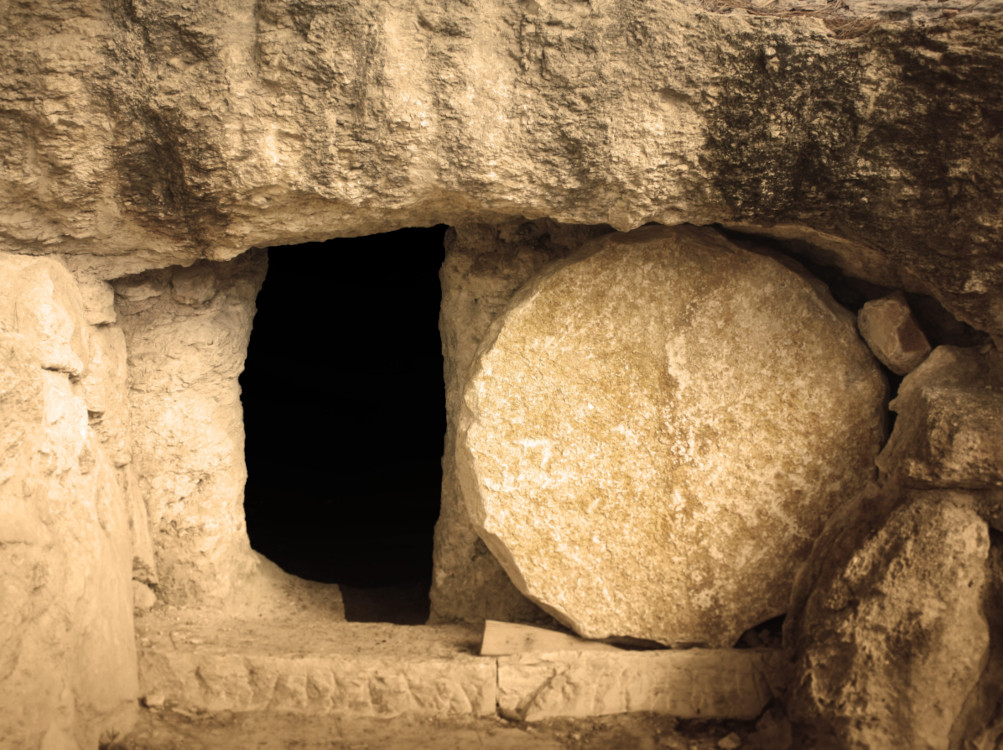
“Through this Easter season I’ve been mediating on the bodily resurrection of Jesus – what it means and promises, Stu Cameron, CEO/Superintendent for Wesley Mission, posted on Facebook last week. “And how it is an essential foundation for orthodox Christian faith.”
“Scattered through mainline denominations are senior church men and women – leaders – who do not believe in nor preach the bodily resurrection of Jesus, and its promise of the same for those who entrust their lives to the crucified and risen Christ.
“But a gospel that rejects the biblical witness to Jesus’ bodily resurrection is no gospel – good news – at all.”
Cameron is right. The bodily resurrection is essential to the real Easter message.
The Other Cheek happened across the NSW moderator Rev. Faaimata (Mata) Havea Hiliau’s Easter message. To be fair, the Other Cheek does not know whether Cameron had this message in mind. We are not sure it fits into the category he is condemning. It is ambiguous to The Other Cheek’s mind. But it is worth examining.
And to be fair, let’s quote it in full. “What does the resurrection of Jesus ask of us today? Does the story of the empty tomb still speak into the fear, injustice, and despair around us? Would you join me here in the dark as we journey towards the light? You see, it’s here before the light breaks, before understanding stirs, where resurrection begins. In the pre-dawn darkness, Jesus rises, reaches out, calls us by name, not to pull us away from the world, but to send us back into it with renewed purpose.
“The empty tomb is more than a story we remember. It’s a declaration that God’s life is still moving in this world with purpose and urgency, even before the light becomes visible. And it’s right in the midst of our aching world that hope comes and meets us in quiet and deeply personal ways.
“Late last year, the birth of my first grandchild was one of those gentle, grace-filled reminders that new life keeps arriving, even in uncertain times. Celebrating new life does not require us to ignore the world’s brokenness, but it does invite us to imagine what might yet be possible. What if God is calling us to ask what kind of world, what kind of church we are shaping for those who will follow us?
“What will our grandchildren inherit? When we enter the resurrection story, we learn that faith is never merely personal. The risen Christ draws us towards others, especially those pushed to the edges of our community. Today, I’m here at Parramatta Mission.
“Who might this be where you are? Resurrection calls us to live our faith through the care of others, the justice we pursue, and the love we extend to those in need. Wherever people choose justice over indifference, service over self-interest, and love over fear, the risen Christ is at work.
“This Easter, we proclaim resurrection in a world that carries real grief. Recent acts of violence close to home and beyond our shores have shaken communities and left deep wounds. And yet, amidst the pain, we witness compassion and courage, neighbours supporting one another, first responders stepping forward, chaplains offering presence and prayer, volunteers serving meals.
“Here we see glimpses of the resurrection at work, not denying suffering, but refusing to let it have the final word. So as this Holy Easter unfolds, look around you. Resurrection begins in the darkness. The light of Christ does not pull us out of the world, but propels us into it. So let the light that breaks through darkness guide your way. Let it move you closer to those who are excluded and unheard. May the resurrection of Jesus continue to call us Christ is risen. Have a blessed Easter.“
It would not be fair to say this message speaks against the bodily resurrection of Christ. The message is that because God is still active in the world, we are to be active, too, in love, good deeds and seeking justice. That is all true and worth saying. But it leaves out proclaiming the bodily resurrection of Christ and the promise of a new Jerusalem.
And somehow this is “more than a story we remember”? Is it a divine legend that inspires us to serve others, or was it a real event that will inspire us to serve, but also that it is service to a risen king with whom we will be with one day?
There’s a discussion guide with the moderator’s message. None of the questions discusses the Bible account of the Resurrection, but instead talks of resurrection as a process, of change, or serving others. Perhaps somewhere else, Moderator Havea Hiliau has affirmed bodily resurrection, but here we deal with her Easter Message for 2026.
Why not add a reflection of Mary from Magdala’s joyful message, “I have seen the Lord?” Or Thomas’s encounter with real wounds?
An example of an Aussie progressive theologian affirming the bodily resurrection is this recent piece by Robyn Whitaker, Associate Professor of New Testament, Pilgrim Theological College, Perfect Bodies and the Resurrection “That God raised Jesus from the dead defies scientific explanation and rational argument. Yet, since the earliest Christians began preaching, belief in the bodily resurrection of Jesus has been central to Christian proclamation.”
Reflecting her progressive Christian stance, Whitaker is alert to possible problems in proclaiming bodily resurrection.
“Even though many in our world might scoff at such a belief today or interpret it as merely symbolic, the bodily nature of Jesus’ resurrection, and ultimately our own, is important for the way we think about hope, healing, disability, our bodies, and the future. Moreover, failing to consider the ways we talk about and imagine resurrection leaves us in danger of doing harm to one another now. So what happens to bodies like mine? Or the person who is hearing impaired or who cannot walk? Whether disability remains in the afterlife is a matter that is hotly debated by scholars working on theology and disability. To say disabilities disappear implies the kind of heavenly eugenics mentioned above where the perfected human becomes an able-bodied one.”
As Whitaker points out, our bodies will be different; it took time for Mary Magdalene to recognise Jesus.
But Professor Whitaker proclaims the bodily resurrection of Jesus as a literal fact, while being open about what we don’t know. What of gender, race, and appearance in the New World? Unknown.
“Dear friends, now we are children of God, and what we will be has not yet been made known. But we know that when Christ appears, we shall be like him, for we shall see him as he is.” (1 John 3:2 NIV)
Image Credit: pickpic.com