
A bill to ban abortions after 25 weeks, except when necessary to save the life of the mother or in cases of serious fetal abnormalities, passed the SA Legislative Council 10 votes to 9, but lost in the SA lower house, the Legislative Assembly, 36 votes to 9.
After the bill moved by Sarah Game MLC, was passed in the upper house, Premier Peter Malinauskas moved to have it dealt with swiftly by the lower house.
However, the ABC reports that both Premier Malinauskas and opposition leader Ashton Hurn voted in favour of the bill, which was a conscience vote for both their parties.
One Nation MP Chantelle Thomas told Parliament of her own experience where doctors told her to abort her child at 28 weeks, Family First’s Lyle Shelton reports in a fuller account of the debate. Her seven-year-old daughter was “living proof that sometimes the predictions are wrong”.
Her seven-year-old daughter was “living proof that sometimes the predictions are wrong”.
Shifting politics played an important part in the vote, with the three newly elected One Nation MLCs voting for the bill. Sarah Game, originally elected on the One Nation ticket in 2022, later defected to form her own “Fair Go for Australians” party, but announced she was joining Family First as her bill came up for a vote.
Abortion activist Professor Joanna Howe had hopes for the bill, according to an ACL press release: “With Roy Morgan polling conducted in May showing that 96% of One Nation voters and a majority of all voters (64%) support a ban on third-trimester abortion, we hope that the parliament takes swift action to ban feticide for babies older than 25 weeks.”
After the votes, Family First’s National Director Lyle Shelton noted “For a few historic hours last night, South Australia became just the SECOND Australian jurisdiction ever to pass a pro-life bill through a parliamentary chamber.” (The earlier example was in the ACT)
Opinion: A case FOR the bill
Sarah Game’s bill, the Terminations After 24 Weeks and 6 Days Amendment Bill 2026, originally provided only for an exemption from the ban on abortions after 24 weeks and 6 days if the termination was necessary to save the life of the pregnant person. However, an amendment to also include serious fetal abnormalities was accepted and incorporated into the bill.
Maternal serum screening performed by SA Pathology screens for Down Syndrome, Edwards syndrome and neural tube defects. In Australia, the Down Syndrome termination rate is estimated to be around 90 per cent for women receiving a confirmed high-chance screening result, according to an ABC report.
People living with Down Syndrome are living longer and healthier lives as improved knowledge about how to support them has become available through research. The life expectancy of People living with Down Sydrome is now 60 years; they are eating better and living fuller lives.
In effect, the case for the Sarah Game bill is that people like my friends – some of the people I volunteer for in disability sport – are being killed. The bill would have saved a few of them. Those opposed to the bill, such as the Royal Australian College of General Practitioners, argue strongly and correctly that abortions above the age of viability are rare, but also that they occur to save the lives of mothers, and for severe fetal abnormalities. But that includes people living with Down Syndrome.
The definition of fetal abnormalities’ criteria used in abortion laws around Australia needs to be re-examined. Some of these abnormalities are fatal, others are much more severe than Down Syndrome. In this writer’s view, some of these categories should be excised from the abortion law. Starting with babies older than viability, as the Sarah Game Bill did, is a good place to start.
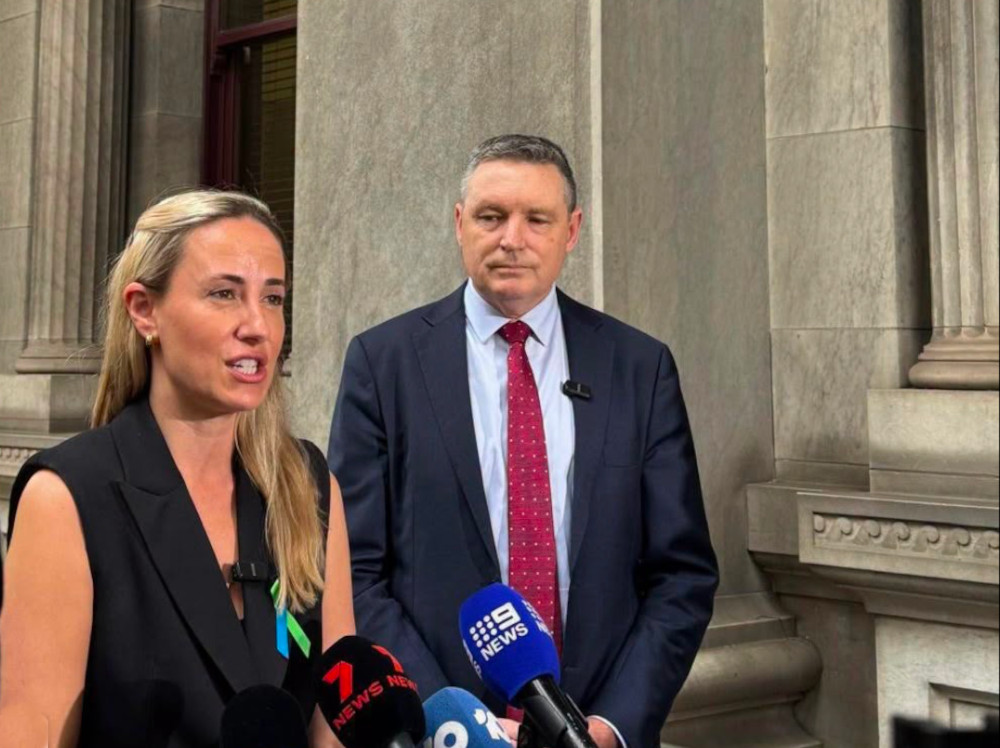
Image: Sarah Game joins Family First. With Lyle Shelton on the steps of the SA parliament. Image Credit: Sarah Game FB