In the lead-up to the 250th anniversary of the USA (semiquincentennial), Peter Bentley provides a selection of articles from his series looking at the USA through American film and television.
On my first trip overseas many years ago (to Asia), I was provided with a few American dollars as a gift from a frequent traveller with the comment that they would be helpful, and he was certainly right.
“The almighty dollar” is still a slogan that vividly illustrates the economic and financial dominance of the USA. It has been almost a universal currency, though new forms of monetary appeasement are testing it.
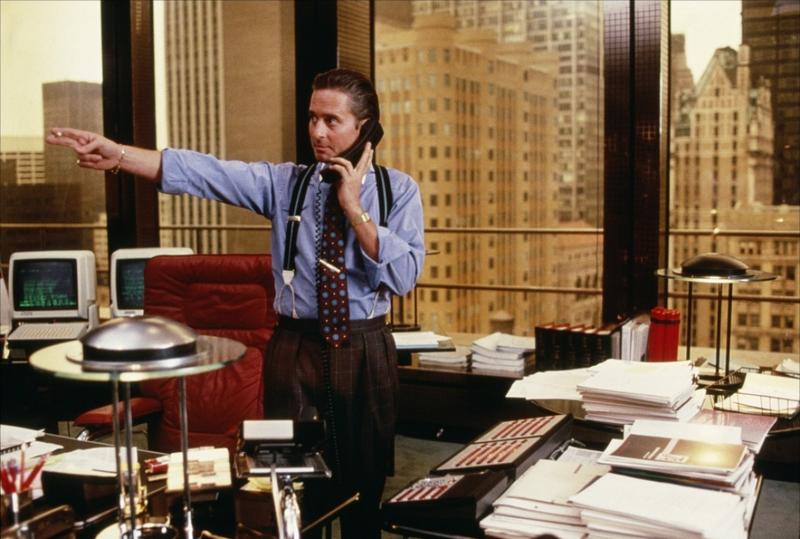
When thinking about film and money, there is no greater highlighting of the almighty dollar than in Wall Street (1997) and its sequel, Wall Street 2: Money Never Sleeps (2010). Michael Douglas’s Gordon Gecko was the living embodiment of the money man. The line ‘Greed is good’, has become almost as well-known as the suitably opposing biblical verse.
Though when it comes to Wall Street films, Trading Places (1983) is my favourite. Apart from reliving classic aspects of the 1980s, the characters played by Eddie Murphy and Dan Ackroyd provide a timeless comedy-drama team. The final scene on the trading floor aptly demonstrates the power of the dollar, given that $1.00 was all that the bet was made for.
The Wolf of Wall Street (2013) highlighted in a modern way the Gordon Gekko role, lifting greed to the stratosphere in terms of the amount of money on offer. This film also brought Australian Margot Robbie to prominence, and led to her having more substantial roles, and significantly, a producing foundation with wider control. It also meant that in reverse cultural imperialism, an Australian would portray the most quintessential American female ‘figure’ of all time, namely Barbie (2023).
Margin Call (2011) is a look at the start of the global financial crisis and the issues that resulted. With a host of unlikeable characters, Jeremy Irons stands out as the god-like, ruthless figure landing from on high to give the final blessing to end of the world as it was then known.
The Big Short (2015) is memorable for the quality of the acting and the whimsical and startling real-life vignettes that help this to appear more like a documentary than fiction (though based on a true story).
I need to mention at least one George Clooney film, given we were born in the same year. That is where the similarities end. Money Monster (2016) is oddly billed as a crime thriller, but it could be a black comedy. Directed by Jodie Foster, it does not provide a clear path to its style, but I am sure that audiences were cheering at times for the underdog and relished the possibility of personally punishing the greedy financial guru.
And the world of gambling and money laundering
Goodfellas (1990) is the original updated gangster film for the modern world. A sadly mesmerising story that draws the viewer in from the opening scene, so brilliantly narrated by Ray Liotta as Henry Hill.
The audacious flaunting of money makes the dollar a character in its own right and highlights the perennial issue of temptation and succumbing to the seduction provided by men with money.
Casino (1995) with a cast of dependable actors, including Sharon Stone in a star turn, in a depressingly effective way. This film highlights the significance of the dollar in gambling within legal casinos and the intimate connection with criminal enterprises, something that is supposed to have now been eradicated due to stricter controls.
While three seminal television series, The Wire, Breaking Bad and Ozark have a common connection, namely the drug trade, it is all ultimately related to the dollar. If there were no money to be made from drugs, there would be no business.
In an article on ‘The USA and Drugs’, I highlight how Ozark (2017-2022), inverts the witness of the bible as the Word of God is literally used to distribute drugs for money and from this one action evil compounds.
And who can forget the ending in Breaking Bad (spoiler alert) when Walter White is bribed to not kill the gang leader by being offered the location of the barrels of money they had now hidden, but since he has finally realised buried treasure is meaningless, he terminates the plea without a second thought.
When considering this theme, one can look no further than a verse in the Bible that is often misquoted. It is helpful to include the verse before this most recognisable verse.
“ But those who want to get rich fall into temptation and a snare and many foolish and harmful desires which plunge men into ruin and destruction. For the love of money is a root of all sorts of evil, and some by longing for it have wandered away from the faith and pierced themselves with many griefs.” (1 Timothy 6: 9 – 10 NASB1995)
We can make a significant amount of money in our lives, and that can be good, but the temptation is to love the money we make and to simply want more of what could be termed our ‘first love’.
I penned a somewhat controversial article in 2023 about being a blessing, particularly through your will. What a joy it is to be a blessing. While the verse 1 Timothy 6: 10 is well known, it is helpful to highlight 1 Timothy 6: 7. This simply puts the dollar in perspective.
“For we have brought nothing into the world, so we cannot take anything out of it either.”
Denzel Washington helpfully illustrated this during his commencement speech to the Dillard University in 2015.
“Number three: you’ll never see a U-Haul behind a hearse: I’ll say it again, you’ll never see a U-Haul behind a hearse. I don’t care how much money you make, you can’t take it with you. The Egyptians tried it, they got robbed.”
Note: at present, this article is part of a collection hopefully to be published as a book before the American quincentennial.
Peter Bentley
pkbentleyarchive.com
Image: Gordon Gekko, played by Michael Douglas in the movie Wall Street. Image Credit: 20th Century Fox / Flickr