
A call to proclaim the gospel – to evangelise – and read the Bible in small groups is the core message of a new Vatican document. ” Venite ad Me: Considerations on the Transmission of the Faith in an Epochal Change, was published by the Dicastery for the Doctrine of the Faith – a body once known as the Holy Inquisition changed with safeguarding the Catholic faith.
But the language of the proclamation, like other recent documents, is sounding somewhat Protestant, and like other recent documents seeks to base its argument on Scripture.
The Kerygma (κήρυγμα), or proclamation of the core gospel, is the focus of Venite ad me (come to me), along with a realistic and lengthy analysis that the Catholic Church has not done it as well as it should have.
Not a recital of facts about Jesus, but a heartfelt call to follow him is required: “The proclamation of the foundational and fundamental truth of Christianity—Jesus Christ, who is alive, loves you and gave his life to save you—must take place in such a way as to bring about an experience of faith capable of initiating the formation of one’s Christian identity. This outlines a threefold process that must characterise the transmission of the faith refocused on the kerygma: above all, the central proclamation of the presence and love of the Risen Christ; the inner experience of his presence and love, sparked by that proclamation; and finally, the beginning of a journey of knowing and loving Christ, made possible by the recipient’s acceptance of the proclamation with a free and sincere heart.
“77. “It is not, therefore, a mere transmission of content—however important that content may be, even as it concerns the salvation of every human being. It must be a “performative” proclamation, capable of truly touching the hearts of those who receive it and of drawing them toward the heart of the Lord Jesus, where it is possible to contemplate and come into contact with that fire of love that he came to cast upon the earth (cf. Luke 12:49). The proclamation of the kerygma must set ablaze the hearts of those to whom it is addressed, following the sublime model that Jesus himself exemplified with the disciples on the road to Emmaus: ‘They said to each other, ‘Were not our hearts burning within us while he was talking to us on the road, while he was opening the scriptures to us?’(Luke 24:32).”
It is striking that Venite ad me acknowledges that the complexity of Catholicism gets in the way of people coming to know Jesus. “It does not seem fitting – when communicating the faith to new generations, adult catechumens, and so-called ‘returnees’ – to get lost in the many areas of Catholic doctrine, however important they may be, and thus lose sight of what is most solid, profound, secure, [and] meaningful within it: namely, the love of God, which is like a flame capable of restoring life, joy, hope, and trust to every human existence. Thanks to the action of the Holy Spirit, this flame is accessed through an encounter—with faith and in faith—with the Lord Jesus.”
A second call also reflects Protestant practice – to study the word of God in small groups, in addition to going to church on Sunday. “it is absolutely urgent—especially in countries with a long history of evangelization—to emphasise the importance of promoting, in every ecclesial community, groups dedicated to listening to, meditating on, sharing, and praying with the Word, with regular times set aside for their meetings, complementing the celebration of the Sunday Eucharist. Let the words of Pope Francis serve as an inspiration: ‘Regular reading of Sacred Scripture and the celebration of the Eucharist make it possible for us to see ourselves as part of one another. As Christians, we are a single people, making our pilgrim way through history, sustained by the Lord, present in our midst, who speaks to us and nourishes us. […] [W]e urgently need to grow in our knowledge and love of the Scriptures and of the risen Lord, who continues to speak his word and to break bread in the community of believers. For this reason, we need to develop a closer relationship with Sacred Scripture; otherwise, our hearts will remain cold and our eyes shut, struck as we are by so many forms of blindness.’ To foster such familiarity with Sacred Scripture among believers, these Bible study groups can easily incorporate the ancient practice of lectio divina and modern narrative methods.”
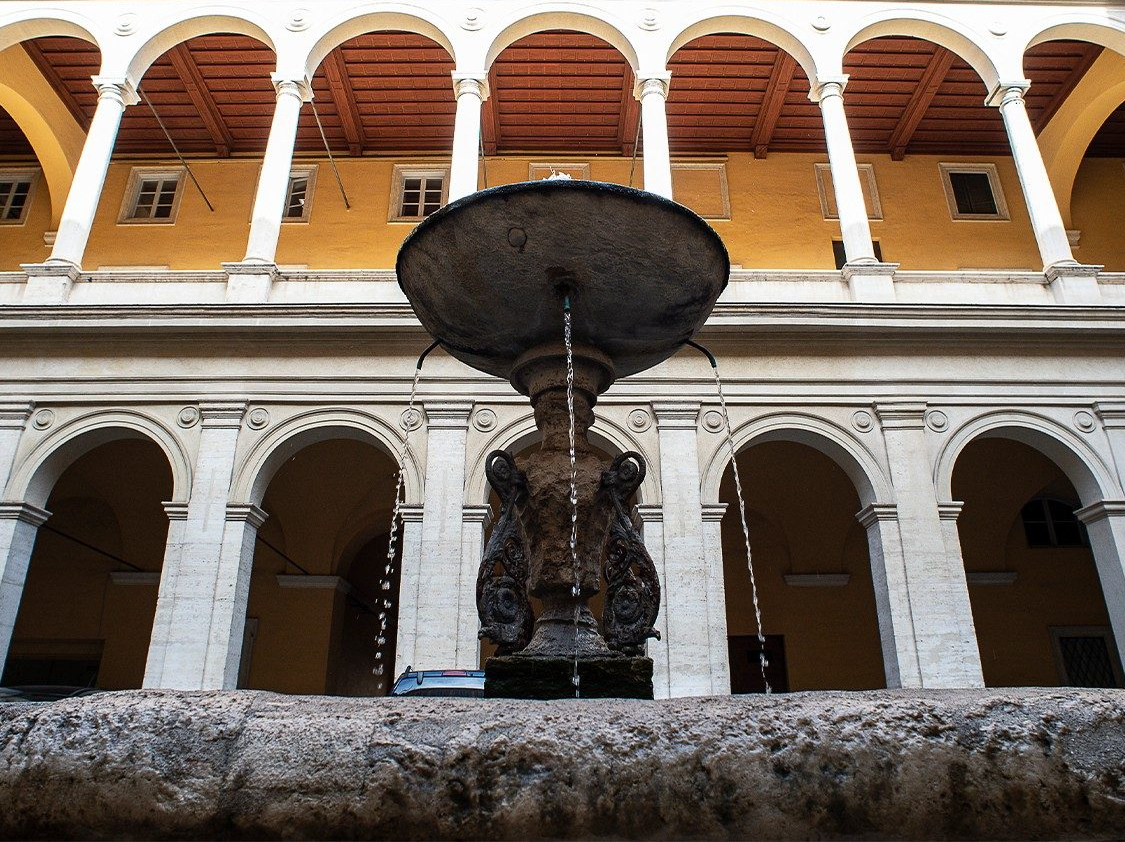
Image: the Dicastery of the Faith’s courtyard. Image credit: Vatican Media