

Daniel Silliman, the journalist who broke the Ravi Zacharias story, gives an inside account of the wave of writers leaving Christianity Today and why independent Christian journalism is being compromised. The Other Cheek reprints this account with Silliman’s permission.
There’s a phenomenon in journalism where sometimes obituaries get published prematurely. A paper runs the news someone has passed, reporting who the person was, what they accomplished, and what killed them.
But the person is not dead.
This can be quite strange for the person. Strange for the reader, too. The reader gets in that moment the striking sense of the opposite of whatever a ghost is. Instead of a life persisting as a spirit in death, death impresses itself into the present, into life, a specter of an absence that is not yet absent, but will be.
The person will die. And in a way, as you read a premature obit, it feels like the memory of that future. Which is not how memory is supposed to work, working backwards. There it is anyway.
You can get that same sense sometimes—the same shiver—with regular reporting. A good story that captures a dramatic change, a snapshot of a passing moment of historical transition, and you realize oh this is the obituary. You think it hasn’t happened yet. Yet, this is the story of the death of the future.
That’s how Ruth Graham’s careful reporting in the New York Times on the crisis at Christianity Today—including the story of some of my work reporting on evangelicalism, and how it was supported until it wasn’t—reads to me.
The flagship of American evangelicalism is not dead yet. But it is dying and this will probably be how it dies: financial crisis, the pressures of political polarization on evangelicalism, and wild, panicky leadership.
The weight of that sits on me. It’s really something.
For the last year, since this started for me, I guess, I have had this recurring image-sense of standing in the dark on a cold shoreline, watching a ship on fire. It cracks in two and sinks into the blackness.
I imagine or sense people mourning around me, behind me. And people further away who cheer the destruction. I understand. There are also people with theories about what happened. A rising chatter of I told you so and I knew it.Some of what they’re saying I agree with. Some I could correct if I wasn’t so tired.
But in my recurring image, I’m on the bank, in the dark, and I feel dread. And awe. Dread and awe together, intertwined, as the fire of the flagship sinks down.
The departed
My list—unofficial, obviously—of people who have been fired, laid off, let go, forced to resign, or otherwise quit in the last 13 months at Christianity Today. It’s a lot of people. Each of them have their own stories.
- Joy Allmond
- Sho Baraka
- Cody Benjamin
- Haley Betsill
- Eric Bivens
- Jared Boggess
- Elise Brandon
- Kara Bettis Carvalho
- Lauren Castro
- Sean Cheng
- Mike Churchvara
- Mike Cosper
- Angie Cronk
- Ashley Ekmay
- Kevin Engel
- Abigail Erickson
- Lisa Frank
- Claudia Gerwin
- Marlon Gutierrez
- Ashley Hales
- Jill Hathaway
- Joy Hartman
- Walter Hegel
- Melissa Huff
- Franco Iacomini
- Will Kelly
- Bonnie Kristian
- Christine Kolb
- Jung Kun
- Nicole Lara
- Morgan Lee
- Stephanie Martinez
- Stefani McDade
- Kathryn McQuaid
- Susan Mettes
- Clarissa Moll
- Julia Mpofu
- Marvin Olasky
- Andy Olsen
- Isabel Ong
- Jack Panyard
- Rich Perez
- Harvest Prude
- Chris Poblete
- Matt Reynolds
- Alecia Sharp
- Kate Shellnutt
- Daniel Silliman
- Mallory Tlapek
- Liz Velasquez
- Jacob Walsh
- Sara Kyoungah White
There was another round of layoffs about six months before that, too. I don’t have all those names. No one has all those stories.
A vertical video irony
Ruth Graham reports—accurately, I was there, though I’m not the source for this information—that a new leader at Christianity Today said, a year ago, that CT needed to be less like Wheaton College and more like TikTok.
There were two things I didn’t and still don’t understand about that proclamation of the vision for CT.
One, it was aimed in part at the print magazine. The exec was saying, via metaphor, that the articles were too academic, too deliberative, too elite, too slow. We needed to liven things up. But this criticism came just after an extensive, expensive redesign and relaunch of the print product. Why put all the effort into print and then diminish it?
Two, the leadership also quashed CT’s TikTok. Two younger staffers had been experimenting with the platform, seeing what it could do, how it connected. They were figuring out how to take, e.g., news reports about evangelicals in the UK giving up their banks for lent, and turn them into shortform video. What they were doing seemed to have the potential to reach and build new audiences. It was exciting. Until suddenly word came down from the top that it was shut down. No explanation. Just ended.
The person making TikTok videos was laid off right after leadership said CT needs to be more like TikTok.
So the message, somehow, was less like Wheaton, more like TikTok, but also no TikTok.
What Kucharsky Did for Evangelicalism
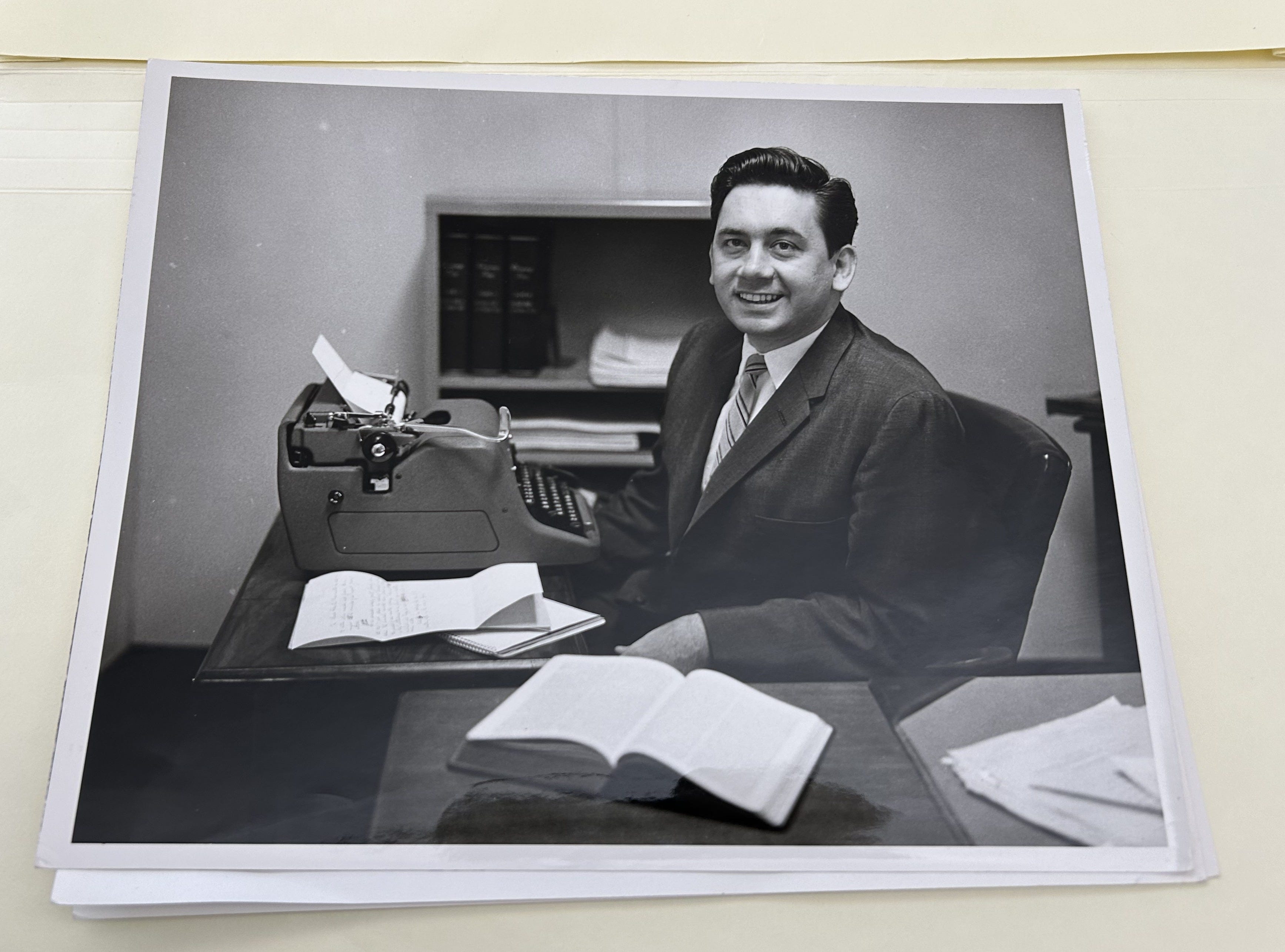
The founders of Christianity Today didn’t talk about hiring reporters when they started the evangelical magazine in 1956.
A few years ago I read the 13 months of daily correspondence between the first editors prepping for the first issue. I may be the only person who has read all those letters and cables and memos since the original recipients. The editors talked about the font for the magazine, where the money was going to come from, some divisive theological issues and—especially—who could and could not be considered a friend of evangelist Billy Graham.
Nothing was said about the need to hire journalists who specialized in who-what-where-when-how reporting. But the they did hire real reporters, right off the bat.
The decision to bring in David “Gene” Kucharsky from United Press International, might have been confusing to donors. I don’t know, for example, that that’s what Nashville shoe-manufacturing magnate W. Maxey Jarman had in mind when he sent his checks to Billy Graham’s father-in-law.
But the reporting quickly set CT apart. There were lots of religious magazines and newspapers in those years, but they weren’t reporting. You read them for theological reflection. For ministers’ opinions. Takes. You didn’t find out what was happening.
Kucharsky reported.
On Sunday laws. On religion at the World’s Fair and what “head of Christ” artist Warner Sallman was doing now. Missions drama and Billy Graham’s evangelistic efforts and Ruth Graham (the other one) having a baby. Denominational division. The struggle of churches behind the Soviet “iron curtain.” An evangelical running for president. Christian colleges starting sports programs.
And more: Ecumenical visions. Moon landings. Grape boycotts.
He gave readers plain facts they otherwise wouldn’t get about the world.
In the process, he made evangelicalism visible. He made it so it could be visible—taking the events not just in one denomination but across, scattered, pulling together different things, theological ideas and practices and conflicts in different communities that were similar, though their own, tensions people felt that other people in other contexts could say, oh I have that too, and he told a story. Fractured. But coherent.
Everything he wrote said, here is evangelicalism. What he wrote, in a way, made it real.
Recent work
When I got in trouble for my reporting on megachurch pastor Greg Laurie getting sued, I thought that might be it for me in journalism. These jobs don’t grow on trees. But also you have to know what you will do, won’t do.
There are worse things than losing a career.
Within three months, though, I had a position at Roys Report, reporting on scandal and abuse. The first story I did was about allegations about megachurch pastor Greg Laurie. I kept digging and found other things going on at that church too.
I’m old enough to know that stubbornness is not always so rewarded. I’m incredibly grateful I’m doing this work especially after it seemed like I wouldn’t be able to anymore.
Every week, it seems, I get to get my teeth into a secret that I can drag into the light.
I mourn CT. I mourn evangelicalism. But I also pray, every day, Lord give me the strength to do the work you’ve given me to do.
This week that means:
- An Indiana megachurch pastor fired for toxic leadership starts a new church, one mile away, four months later.
- A missionary to Haiti said he cared for and raised more than 100 boys. U.S. prosecutors say he sexually abused them.
- A small Christian college in North Carolina is threatening to sue students who say anything bad, even to other students or their parents.
- Christian writer who defended mass deportation is arrested and held for ICE.
- My advice for tracking midterm congressional elections:
- Disgraced Hillsong Pastor Carl Lentz has a new book out called Overcoming Infidelity. I did not like it and do not recommend it.
Reprinted from Transient Ground (linked), Daniel Silliman’s mostly weekly newsletter about American media, Christian history, and prayer.
Image: Christianity Today covers. Image credit: CT archives.