
I first came across the Bernard Gaynor case years ago, but I have resisted writing about it. Gaynor, a conservative Catholic and prolific internet commenter, was dismissed from the Army Reserve for provocative public comments. An example was an article “Malcom can’t be a Cate” attacking transwoman Catherine MacGregor, which is still on his website. Gaynor won in the Federal Court, lost in the Full Federal Court, and then the High Court declined him special leave to appeal. Other, arguably vexatious litigation (43, yes 43 complaints to the NSW anti-discrimination board) with a gay rights activist led to Gaynor losing his house.
When I read his social media, many comments were expressed with the sort of soldierly language that most Christians would object to, and would have castigated me for publishing it.
Another well-known free speech case is Jereth Kok, a doctor found guilty of professional misconduct over his social media output. One of the samples used in the case was an Eternity article I published on the subject of transgender, which argued for a biological definition of sex. I had edited that piece, taking out some of his language, but clearly supported Kok’s right to free speech.
And a third case is that of campaigner Kirralee Smith, who took a local website’s account of a transwoman footballer and campaigned nationally about it. This was one of two trans women footballer cases for which Smith has been hit with a $95,000 fine for unlawful vilification. The fine is stayed while her case is under appeal.
All three involved a Christian expressing an opinion. All three involved legal consequences. In each case, we can draw a distinction between the principle each was seeking to uphold and the sort of language they used.
We can ask –
1) Do we agree with what was said?
2) Do we think they had a right to say what they said?
3) Were the legal consequences proportionate?
Gaynor lost his house and his place in the Army. Kok lost his profession. Smith had a huge fine. A strong case can be made that each consequence was disproportionate. In addition, Kok and Gaynor were subject to agonisingly drawn-out legal procedures.
Some readers will see all three as Christian sisters and brothers punished for their beliefs. An opposite reaction will be to write them off as culture warriors. Perhaps some will give varying degrees of respect to the three – that is where this writer lands.
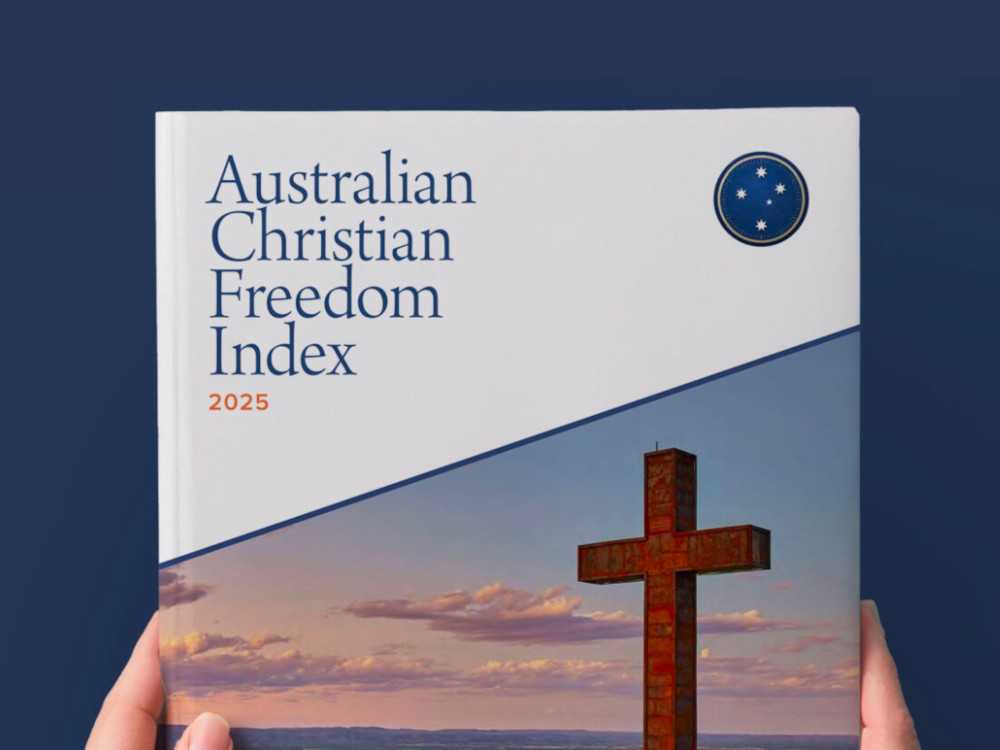
All three are treated as heroes in the recently published inaugural Australian Christian Freedom Index (ACFI) published by The Canberra Declaration, a ministry of Australian Heart Ministries
These three cases are examples of where the boundary – not between an unlimited right to freedom of speech or religion – but where an undue imposition on those freedoms lies.
ACFI treats them all as cases of unjustified repression of Christian speech. There is no hint in ACFI that they might have injured or wronged someone in what they posted. These are individual cases, and so it is possible to come to different views about whether their actions were problematic. Kok has acknowledged that, given his time again, he would not use the same language in some of his Facebook comments, but as far as The Other Cheek is aware, the others admit no fault.
These three cases are among those given extended coverage in ACFI, but another strong component of the publication is a self-selected survey of some 10,808 responses.
Some of these involve clear discrimination against people for expressing their Christian faith.
“At my workplace, I was told that my necklace with a crucifix on it was disrespectful to the Muslim women I was working with. I refused to remove it. The Muslim women were allowed to wear their hijabs, so why should I have to remove my crucifix?” Respondent #7,085
“I have been beaten many times when street preaching. On some occasions, I have required hospitalisation as a result of being attacked. I have been roughly handled by police and arrested two times.” Respobdent #9,000
“I was studying a BA at Monash University in Melbourne. In an essay for a Psychology course, I included quotes from the Bible along with quotes from other sources. I was told that if I quoted the Bible again, I would automatically fail the subject.” Respondent #1,136
“An application to join the Liberal Party was rejected when our Christian ministry role was mentioned.”
Respondent #2,251
“As a pastor involved in prayer ministry, I am unable to minister in areas of sexuality, even when recipients desire prayer in that area.” Respondent #3,400 is referring to restrictions imposed by the ‘conversion laws’ in several states.
“I had my roster changed and hours cut by a temporary supervisor (who’d stated to other workers that she was not going to give good shifts to the ‘Bible‑bashing b****’). She denied it when I confronted her but could not explain the roster changes. Three months later, she put in a serious false complaint and had me unfairly dismissed. I won in court but did not want to go back to that workplace.” Respondent #3,476
Other responses don’t appear to be as clear-cut, at least as far as this writer is concerned.
“I am a Religious Instruction volunteer in schools. We are not allowed to say “boys and girls” or talk about gender, even if asked by students.” Respondent #1354
Religious Instruction is the name of voluntary teaching of religion in Queensland. The coalition government in Queensland has wound back some of the inclusion policies of the previous Labor government. RI teachers, like SRE teachers in NSW, are required to teach to authorised curricula formulated by religious bodies. This writer teaches SRE at a local public school using the Sydney Anglican Connect curriculum, which means he does not cover sexuality. That means parents can know what their kids will be taught. SRE and RI volunteers can’t simply freelance their own material.
“I work in the music and entertainment industry. It’s distinctly anti‑Christian. In conversations when Christianity was raised, but people didn’t know I was a Christian, I would routinely hear, “Bring back the lions.” Respondent #5,303 This appears to be a case of a robust workplace environment. Can we expect non-Christians not to mock us, especially if they don’t know we are Christians?
However, there are other strong cases in ACFI, especially about Christians losing their jobs for expressing their faith. Perhaps the most egregious was Andrew Thorburn’s. “Appointed CEO of the Essendon Football Club on 3 October 2022, he resigned the following day after media scrutiny focused on his role as board chair of an Anglican church whose sermons—preached by others, nearly a decade earlier— expressed biblically orthodox Christian views on sexuality.”
A weaker case is on the same page:. “Citipointe Christian College in Brisbane issued a transparent enrolment contract in January 2022 stating its doctrinal positions on marriage and biological sex. Within days, a petition of 155,000 signatures, a ministerial referral, and political condemnation followed. The college withdrew the contract within a week, and the principal resigned.” The timing is significant – at three weeks before the start of school, the college issued a new contract requiring parents to agree that homosexuality was sinful, which meant that parents would have to sign on or rapidly find a new school for their child. In this writer’s opinion, this was foolish overreach by the school. The school had been enrolling families with more liberal views than the statement of faith they were suddenly being asked to sign. The political timing was also significant; then-PM Scott Morrison was forced to disagree with the school, which had undermined his attempt at passing a religious freedom bill.
Two ACFI cases don’t appear to fit religious freedom issues. ACFI acknowledges that the case of Dr William Bay, a medical registrar opposed to the use of MRNA vaccines and an advocate for ivermectin as a treatment of Covid “sits at the margins of this report: his views on vaccines and public health policy are not essential components of biblically orthodox Christian faith, though they are shared by a significant minority of Christians and were, by his own account, grounded in his faith.” Bay has won a first round against APRA and had his medical registration returned.
Medical dissidents have similar free speech concerns to religious freedom cases, but are medical debates about Covid religious? Some arguments will touch on abortion, but Bay disrupted the 2022 AMA national conference, shouting, “Stop forcing these vaccines on people who are getting killed by them” Was that a religious viewpoint?
A couple of ACFI cases involve actions by churches. One of these is the second Covid case, involving Steve Forkin, who successfully appealed a conviction for breaching COVID restrictions, but had been suspended from ministry roles by his church.
The case of Elizabeth Kendall is better known. She stepped down from lay ministry after the Anglican Diocese of Melbourne added a rule 6.2(y) to the Code of conduct which lists among an extensive list of “unacceptable behaviours:” “engage in any conduct to change or suppress a child’s gender identity or sexual orientation.”
ACFI does not note the response of other evangelicals in the Diocese that the existing rule 6.2(k)provided that leaders should not “discuss sexual activities with a child unless it is a specific job requirement and the person is qualified or trained to discuss these matters” which minimises the effect of the new rules.
One clear case of conflict between the right to religious freedom for progressive individuals and for conservative religious institutions is recorded by ACFI. “St Mary’s Anglican Church in Armidale informed its organist that his role was incompatible with his same-sex marriage. A coordinated petition, sustained media pressure, and an antidiscrimination complaint resulted in the church issuing a written apology.” St Mary’s West Armidale was a liberal church in a diocese that had turned into a conservative evangelical diocese some decades ago. ACFI’s sympathy aligns, it seems with the diocese. As hinted in the William Bay quote above, ACFI leans towards “biblical orthodox faith.” Perhaps this could be made clearer.
If examples of conservative congregations in the Uniting Church that were forced to leave were also included, would ACFI uphold the rights of the denomination or the group that left? Several of the churches in the conservative Anglican Diocese of the Southern Cross have that history.
Because of the nature of religion, the very word is derived according to Augustine from the Latin religio “to bind again,” which involves a body of humans, not simply individuals. This means that there is always likely a tension between the religious freedom and freedom of speech of an individual and the religious freedom of a religious community or denomination. The ACFI example of the RI teacher can be understood in this light. There is a steady flow of teachers in conservative Christian schools having committed to a conservative religious framework, later seeing themselves of accepting that they are gay and adopting a different religious outlook. Should they count in ACFI’s numbers?
Legal analysis
Possibly ACFI’s strongest evidence of restrictions on religious freedom comes from an analysis of an increasing number of restrictions on religious freedom by legislation.
This includes the restrictions on one-to-one counselling and prayer on sexuality in the various state conversion laws. But other cases stand out.
• “In all states and territories but Tasmania, conscientious objection provides no clean exit for doctors—they must still refer patients to someone willing to perform the procedure.” In NSW, at least, the word “refer” in the formal sense of a written referral does not apply: A doctor can simply tell a patient to look at the NSW Health website. In Queensland, WA and SA, conscientious objectors must inform and refer.
• “Safe access zones of up to 150 metres around abortion facilities now operate in every jurisdiction. Within these zones, prayer vigils, signs, counselling and public witness are all prohibited. In 2019, Tasmania used these laws to prosecute Graham Preston for his pro-life advocacy. Preston challenged the law all the way to the High Court, joined in the challenge by Victorian mother of 13, Kathy Clubb, who had also been prosecuted for handing a leaflet to someone outside a Victorian abortion clinic. The Court upheld the zones as constitutional, setting a precedent for the entire country.”
• “Christian families who hold biblical views on these matters [marriage and sexuality] can be prevented from fostering—as Byron and Keira Hordyk were in Western Australia—and must fight through costly litigation to overturn such decisions.”
• “Australia has passed no federal legislation protecting religious freedom. Successive governments have promised and failed to deliver. This absence means Christians have no protection for religious belief comparable to that available for sex, race, disability or age. Believers rely entirely on narrow exemptions in the Sex Discrimination Act and similar provisions in other federal anti-discrimination laws—protections that were designed for a different purpose and are ever vulnerable to reinterpretation.256 The Federal Court’s 2024 decision in Tickle v Giggle, upheld on appeal in 2026, demonstrates the risk: The Court ruled that ‘sex’ under the Sex Discrimination Act is ‘changeable and not necessarily binary,’ destabilising the very categories Christian schools and organisations use to make employment and enrolment decisions.”
ACFI achieves its purpose of demonstrating encroachments on religious freedom in Australia. Not every case mentioned in the Index, however, will be regarded as dispositive by every reader. The publisher of ACFI, the Canberra Declaration, would accept that it adopts a conservative line.
This writer agrees with Professor Neil Foster’s words in his endorsement of ACFI: “Religious discrimination as experienced by believers in Australia needs more research, and this study will play an important part of that needed work. Like every survey it has limitations, but it is an important document reporting the experience of many believers in Australia in 2026, and should be read carefully by lawmakers and everyone interested in supporting the important human right of religious freedom.”