
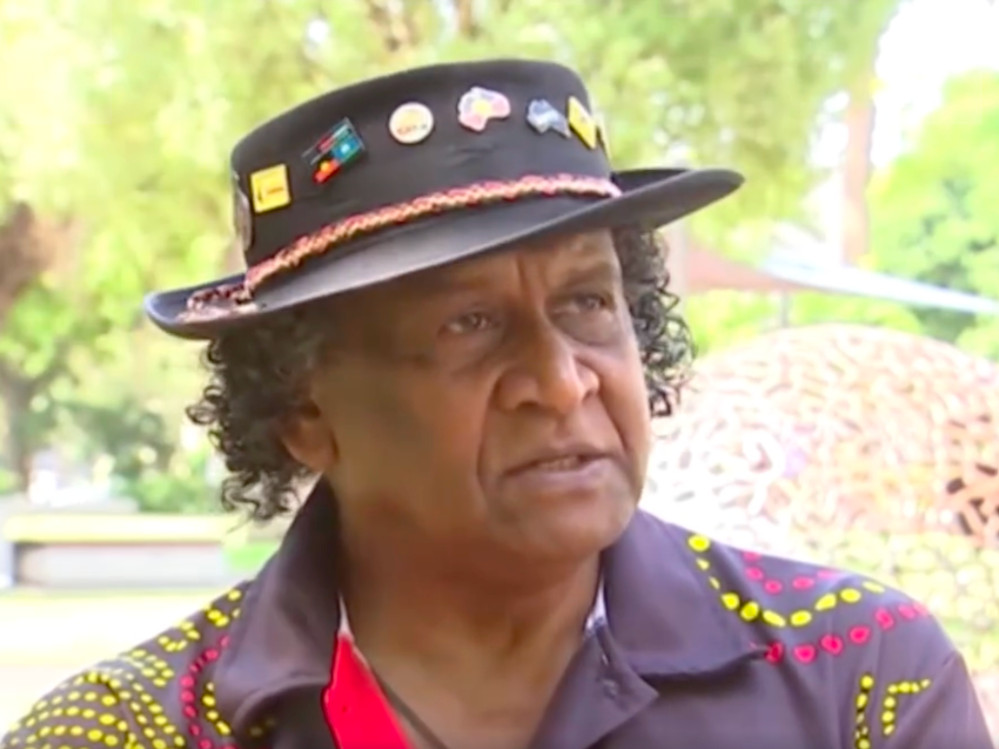
Uncle Ray Minniecon, who was booed at the Anzac Dawn service in Sydney, has written a submission to the “Racism, hate and violence directed at Aboriginal and Torres Strait Islander People,” inquiry currently underway in Federal Parliament.
A JUST RESPONSE TO THE INQUIRY INTO RACISM, HATE AND VIOLENCE DIRECTED AT ABORIGINAL AND TORRES STRAIT ISLANDER PEOPLES
By Rev. Dr. Ray Minniecon.
My name is Rev. Dr. and Pastor Ray Minniecon from Scarred Tree Indigenous Ministries at St. John’s in Glebe. I am a descendant of the Kabi Kabi nation and the Gurang Gurang nation of South-East Queensland. I am also a descendant of the South Sea Islander people from Ambrym Island
I really appeal to you that this Inquiry must not become another document that names pain yet protects the systems that produce it. Racism against Aboriginal and Torres Strait Islander peoples is not incidental. It is structural, historical, and ongoing. It was embedded at invasion, codified through policy, normalised through institutions, and continues today in law, policing, education, health systems, media, and public life. What we are confronting is not simply prejudice; it is a system that has been allowed to remain intact.
1. THE TRUTH
Racism in this country is not diminishing. It is intensifying and becoming more visible, more emboldened.
We are now witnessing:
- Children as young as ten being locked in detention, disproportionately Aboriginal, treated as threats rather than children in need of care
- A rise in community-level racial violence and hostility on our streets, particularly in the aftermath of the Australian Indigenous Voice referendum, where public debate legitimised harmful actions and narratives about our people
- The ongoing over-policing, deaths in custody, and surveillance of our communities
- The increasing removal of our children into Out-of-Home Care systems and policiesthat reduplicate past injustices.
Hate is no longer hidden. It has been given permission.When a nation debates the human rights and legitimacy of its First Peoples in public forums, it sends a signal, one that is heard loudly in streets, schools, workplaces, and online spaces. Hate is not only shouted in the streets. It is legislated. It is administered. It is culturally sanctioned. Until this Inquiry names systemic racism as a foundational issue, it will fail.
2. THE CRIMINALISATION OF OUR CHILDREN
There is nothing just about a system that imprisons children. The fact that Aboriginal children, some as young as ten, are detained at vastly disproportionate rates is not a policy failure. It is a moral failure.
It reflects:
- The continuation of control over Indigenous human bodies from childhood
- The absence of culturally grounded, and appropriately funded, community-based alternatives.
- A justice system that responds to intergenerational trauma with punishment, not compassion.
This is not protection. This is the pipeline from disadvantage to incarceration. A nation that locks up its children cannot claim to be just and right. Detention must be replaced with care, culture, and community-led solutions.
The age of criminal responsibility must be raised as a basic human Right.
3. STRUCTURAL TRANSFORMATION We are tired of acknowledgment without redistribution. We are tired of consultation without consent. We are tired of policies written about us without us.
The standard must shift to:
- Free, Prior and Informed Consent (FPIC) in all decisions affecting our people
- Power-sharing, not advisory roles
- Legal accountability, not moral appeals
Racism survives because it is profitable, convenient, and unchallenged by those in power.
That must end.
4. ACCOUNTABILITY
Governments cannot investigate racism while simultaneously perpetuating it. This Inquiry must demand:
- Independent oversight of policing and youth justice systems
- Binding national anti-racism legislation with enforcement power
- Criminal consequences for racial violence and institutional misconduct
- Reparative justice frameworks, not just recommendations
Anything less is performance.
5. TRUTH-TELLING.Truth-telling without consequence is extraction.
If this Inquiry uncovers truth, and it will, then it must also:
- Fund community-led healing and justice programs
- Return decision-making authority to Indigenous communities
- Invest in Indigenous-controlled education, health, and legal systems
- Address intergenerational trauma as a direct result of state violence
Healing cannot occur while harm continues.
6. INDIGENOUS AUTHORITY. Too often, our pain is listened to, but our leadership is ignored. This Inquiry must:
- Recognise Indigenous peoples as rights-holders, not stakeholders
- Embed Indigenous governance in national decision-making structures
- Respect Indigenous law, knowledge systems, and cultural authority
We are not asking to be included. We are asserting what has always been ours.
7. CHALLENGE THE NATIONAL RHETORIC.
Racism survives because the national story remains incomplete and comfortable.
The events surrounding the Australian Indigenous Voice referendum exposed deep fractures, revealing how quickly public discourse can turn against First Peoples when fear and misinformation are mobilised.
This Inquiry must confront:
- The myth of equality without justice
- The denial of ongoing colonisation.
- The deliberate misrepresentation of racism as isolated acts of individual prejudice,rather than what it truly is; a deeply embedded system, structured and sustained by institutions, policies, and power.
Until the story changes, the system will not.
CONCLUSION This moment demands courage. Not polite reform. Not incremental change. Not another report that gathers dust. It demands a decision: Will this country continue to manage racism, or will it dismantle it? Because when children are imprisoned, and communities are emboldened to hate, the cost is no longer abstract, it is lived, daily, in our bodies and our futures. Aboriginal and Torres Strait Islander peoples have already carried that cost since 1788. The question is whether the nation is finally prepared to carry responsibility.
“Justice is not an aspiration. It is an obligation.”
Image: Uncle Ray Minniecon. Image credit Red Dust screenshot