
Charles Brammall
Pt 1- When One of Evangelicalism’s Most Trusted Voices Asks an Uncomfortable Question.
Some controversies arise because someone deliberately sets out to challenge the church. Others because someone whom almost everyone trusts quietly admits that they are no longer certain about a doctrine that everyone assumed was settled.
The controversy surrounding John Stott’s views on hell belongs emphatically to category 2.
It was not born in rebellion, nor fuelled by theological liberalism or even progressivism. Nor did it begin with an attempt to overturn historic Christianity.
It came rather from the mature reflections of a man who had spent a lifetime defending the authority of Scripture, preaching the cross of Christ, & calling people to repentance and faith; training pastors, encouraging missionaries, and helping shape modern evangelicalism across six continents.
That is precisely why it became one of the most (and in my opinion, unnecessarily) significant evangelical controversies of the late 20th century.
Had an obscure academic suggested that the wicked might ultimately perish rather than endure eternal conscious torment, few would have noticed. Similar ideas had circulated for generations, often on the fringes of Protestant theology. But this was not an obscure academic.
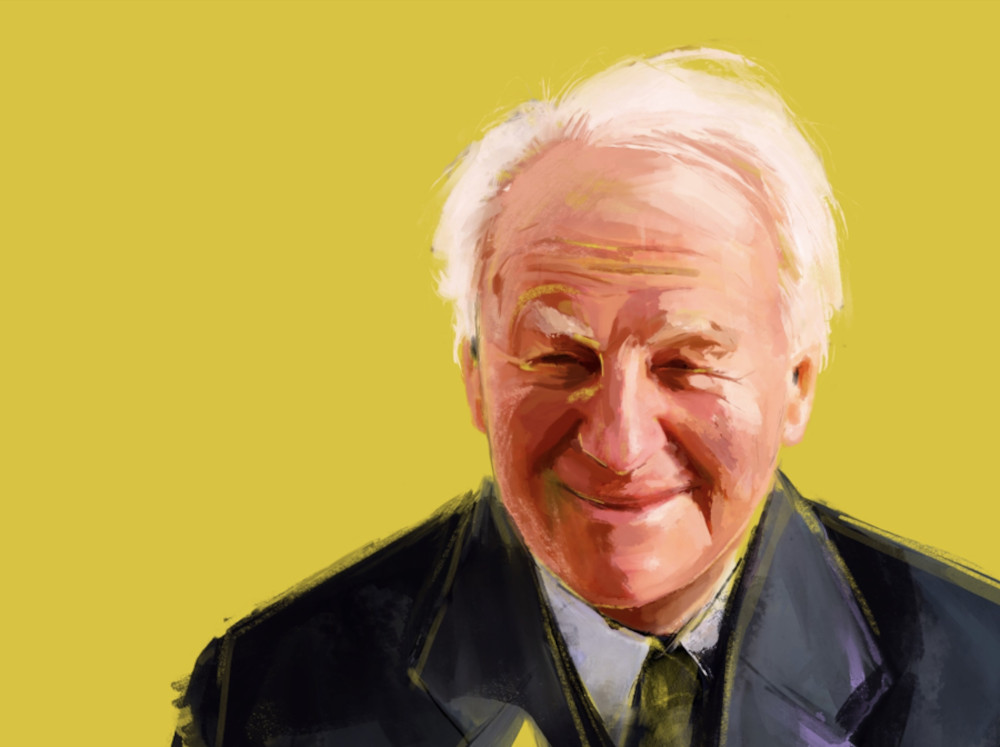
This was John Robert Walmsley Stott.
For millions of Christians around the world, Stott represented careful biblical exposition at its finest. He was neither a sensationalist nor an iconoclast. His sermons were marked by intellectual precision, pastoral warmth, disciplined exegesis, and remarkable humility. Few evangelical leaders of the C20 commanded greater respect across denominational boundaries.
His books became modern classics.
Basic Christianity introduced countless readers to the gospel. The Cross of Christ is still widely regarded as one of the finest evangelical books ever written on the atonement. Between Two Worlds transformed generations of preachers.
His commentaries in The Bible Speaks Today series became trusted companions for pastors across the English-speaking world.
His influence extended even further through his leadership in the Lausanne Movement, where his commitment to biblical authority, world evangelisation, expositional preaching, and thoughtful engagement with contemporary culture helped shape global evangelicalism for decades. Even those who occasionally disagreed with him almost invariably regarded him as a model evangelical statesman.
It is difficult to exaggerate his stature.
By the 1980s, John Stott was arguably the best-known evangelical Anglican in the world. He had spent over forty years defending orthodox Christianity against scepticism, theological liberalism, secularism and unbelief. Few people had done more to strengthen confidence in the inspiration and authority of Scripture.
Then, in 1988, six pages near the end of a dialogue book changed the conversation.
The book was Evangelical Essentials: A Liberal–Evangelical Dialogue, co-authored with the Anglican theologian David L. Edwards. Throughout the volume, the two men discussed biblical authority, Christology, and ethics; mission and numerous other doctrines. Then Edwards asked Stott a direct question about the nature of hell.
Stott answered with extraordinary honesty.
He acknowledged immediately that the traditional doctrine of eternal conscious punishment had been held by the overwhelming majority of the church throughout its history. He expressed genuine respect for that tradition and no desire to dismiss it lightly. Then came words that reverberated around the evangelical world:
“Emotionally, I find the concept intolerable…”
Had Stott stopped there, his comments could easily have been dismissed as an emotional reaction. But he did not.
Indeed, one of the most remarkable features of his statement is that he immediately corrected himself. He refused to allow his emotions to become the judge of doctrine.
He continued: “But our emotions are a fluctuating, unreliable guide to truth and must not be exalted to the place of supreme authority in determining it. As a committed Evangelical, my question must be— and is— not what my heart tells me, but what does God’s Word say?” (afterall.net)
Those sentences are frequently forgotten by both admirers and critics.
Supporters sometimes quote only his emotional difficulty with eternal torment.
Critics sometimes imply that he allowed sentimentality to override biblical revelation. Neither reading is fair.
Stott explicitly rejected the authority of his own feelings. His concern was not that eternal punishment seemed unpleasant, but whether Scripture itself actually taught eternal conscious torment rather than final destruction.
He therefore suggested that evangelicals should “survey the biblical material afresh” and be willing to consider whether annihilationism, more accurately termed conditional immortality, might better explain the biblical evidence than the traditional doctrine.
Even then, he remained strikingly cautious. He did not declare that he had discovered the definitive answer. Nor insist that the church had been wrong for two thousand years. He did not anathematise those who disagreed.
Instead, he wrote words almost without parallel in modern theological controversy: “I am hesitant to have written these things…”
Why?
He gave two reasons:
First, he possessed a profound respect for the long tradition of Christian interpretation.
Second, he deeply valued the unity of the worldwide evangelical movement.
Those two concerns had characterised his ministry for decades. Only after acknowledging both did he continue:
“I do not dogmatise about the position to which I have come.” (And note here, the “position to which (he has) come” is that of finding something emotionally intolerable; it is not rejecting a Biblical doctrine) “I hold it tentatively. But I do plead for frank dialogue among Evangelicals on the basis of Scripture. I also believe that the ultimate annihilation of the wicked should at least be accepted as a legitimate, biblically founded alternative to their eternal conscious torment.” (afterall.net)
Measured by ordinary standards, these are remarkably restrained words.
Measured against the reaction they provoked, they seem almost astonishingly modest. Within months, evangelical conferences, seminaries, publishers and magazines across Britain, North America, Australia and elsewhere were discussing little else.
Some readers carefully engaged his exegesis. Others thanked him for articulating questions they themselves had long wrestled with but had never dared express publicly. Still others regarded his proposal as one of the gravest doctrinal errors ever made by a major evangelical leader.
Several concluded that he had abandoned historic orthodoxy. A few even questioned whether he should still be regarded as an evangelical at all.
One of the saddest features of the controversy was that many reactions bore little resemblance to the spirit in which Stott had written. His appeal had been for patient biblical dialogue. Much of the early discussion became polarised almost immediately, much like the tone in today’s social media.
Instead of carefully examining the relevant biblical texts, some commentators treated the mere raising of the question as evidence of theological compromise. (jmm.org.au)
Yet others responded very differently.
Some agreed with his conclusions.
Others remained unconvinced but defended his right, indeed his evangelical responsibility, to ask difficult exegetical questions while remaining firmly committed to the supreme authority of Scripture. That distinction would become increasingly important over the next three decades.
Ironically, history has proved more patient than many of the original participants. Today, even many leading conservative evangelical scholars who continue to defend eternal conscious punishment readily acknowledge that Stott’s arguments deserve careful engagement rather than dismissal.
The debate has become more exegetical, more historically informed, and generally much more charitable than it was in ’88. Stott’s proposal is now widely recognised as one of the defining moments in modern evangelical discussions of hell, not because it settled the issue, but because it forced evangelicals back to Scripture with an even higher view of it.
But to understand why those six pages created such an extraordinary storm, it is helpful to understand Stott himself.
Why did the evangelical world trust him so implicitly? And were they ill-advised in doing so? Why did one carefully qualified statement from Stott shake churches across the globe? And why did so many people react as though one of evangelicalism’s most faithful servants had suddenly become its most dangerous critic?
The answers lie long before long before 1988, in an affluent London home, a remarkable schoolboy conversion, and a lifetime spent persuading Christians that Scripture alone must always have the final word.
In Part Two I will examine Stott’s early life, conversion, and ministry; his rise to worldwide influence, and why his reputation made the 1988 controversy so unprecedented
Image of John stott from the Gospel Coalition
Wonderfully clear, balanced and helpful. I have long felt the fact Stott’s medical specialist father was not a Christian played a part in his response. Love for a parent is more than sentimentalism.