
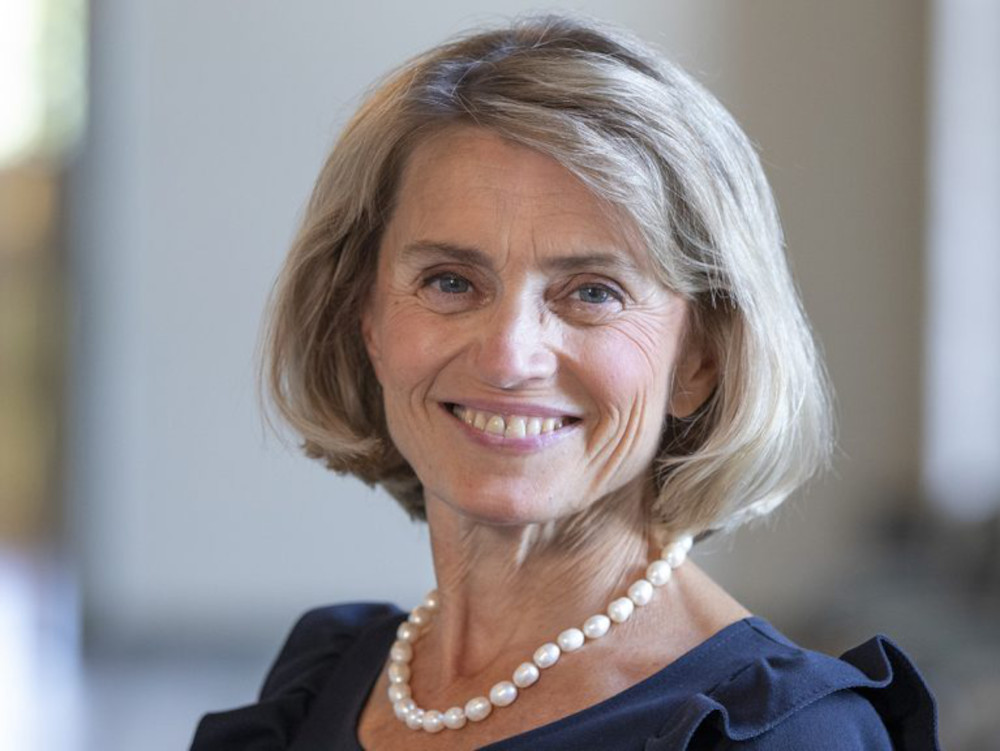
Finnish MP Päivi Räsänen responds to the Finnish Supreme Court finding that a church pamphlet she co-wrote in 2004 was hate speech against gay people.
The Supreme Court has today, 26 March 2026, issued its decision in a freedom of speech case that has lasted nearly seven years. Regarding my tweet containing verses from the Epistle to the Romans, the Supreme Court issued an acquittal. However, Bishop Juhana Pohjola and I were convicted of incitement against an ethnic group and ordered to censor my writing “Male and Female He Created Them,” which I originally wrote in 2004.
The Supreme Court’s decision was not unanimous; it was approved by a split vote of 3–2, and this was contrary to the presenting justice’s recommendation.
I must now take time to carefully read and assess the decision and consider whether it would be wise to appeal to the European Court of Human Rights.
This process began with a tweet I published in June 2019, in which I posed a question to the Evangelical Lutheran Church of Finland (ELCF) after it announced its support for a Pride event. The main content of my post was a photo image attachment containing Romans 1:24–27 from the New Testament. My criticism was not directed at any minority but at the leadership of my own Church (ELCF). On 22 April 2021, the Prosecutor General brought charges of incitement against an ethnic group. Further, brought into consideration were my 2004 pamphlet “Male and Female He Created Them” as well as a 2019 radio discussion on Yleisradio [Finland’s “BBC”] hosted by Ruben Stiller. Bishop Juhana Pohjola of the Mission Diocese was charged with publishing and keeping the pamphlet available online.
The Helsinki District Court dismissed all charges related to my statements on 30 March 2022, and the Helsinki Court of Appeal dismissed them once again on 14 November 2023. The Prosecutor General applied for and received leave to appeal to the Supreme Court of Finland regarding the tweet and the pamphlet, and the Court granted an oral hearing which took place last October.
For me, the investigation—lasting over six years—has included false accusations, more than 13 hours of police interrogations, and preparation for court hearings. I have hoped that others would not have to endure such an ordeal.
This legal process and its decision are historically significant for freedom of speech and freedom of religion. In Finland, for the first time in a criminal case, the courts have weighed whether teachings linked to the Bible may be publicly presented and whether one may express agreement with them. By issuing an acquittal related to my Bible-based tweet, the Supreme Court affirmed the principle of freedom of religion.
Nevertheless, the nearly seven-year process—through investigations and trials—has, even without a conviction, already narrowed freedom of speech and religion by creating self-censorship. But an even more serious problem is the demand for censorship— a publication ban on the text.
I have emphasized that no one has to agree with me in order to defend my right to express my views. Freedom of speech is needed precisely when people do disagree. Despite this decision, I hope it will still be possible to have constructive discussions—under the protection of freedom of speech and religion—even on difficult issues.
I am grateful to God and to everyone who has supported me. From the beginning, I have said that I stand here regardless of the consequences. I still do not consider that anything I have written is unlawful.
In spite of this conviction today, the defense of freedom of speech and freedom of religion has not been in vain. Nor has it been in vain to keep the teachings of the Bible visible in the public eye.
This decision demonstrates that freedom of speech must be defended ever more strongly. In practice, its preservation as a robust fundamental right is not self-evident. I have considered it both a privilege and an honor to defend freedom of speech and religion, which is a central right in a democratic state. I intend to continue doing so.”
Päivi Räsänen has served as a Member of Parliament since 1995, as Chair of the Christian Democrats (2004–2015), and as Minister of the Interior (2011–2015). The case has also attracted wide international attention.
The original pamplet translated into English is here (hat-tip Margot Clifford.)
Image: Päivi Räsänen. Image Credit: Päivi Räsänen in English