
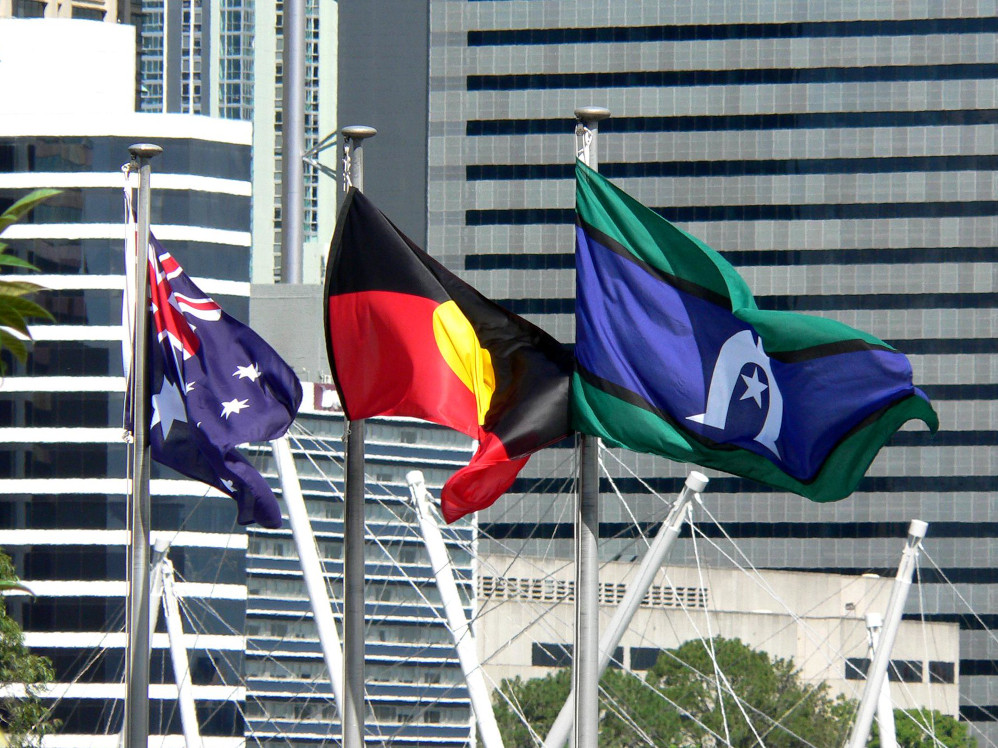
It took time for January 26 to become an official national day for Australia. In 1838, on the 50th anniversary of the settlement, official public celebrations were held for the first time. There were centenary celebrations throughout the continent in 1888, and in 1938, on the 150th anniversary, the day was proclaimed an official holiday. On that day in 1938, the Australian Aboriginal Christian leader William Cooper and the Australian Aborigines League organised a day of Mourning in the Australian Hall.
So oddly, the official proclamation of Australia Day and the organised protest against it occurred on the same day.
A second, more fundamental oddity is the selection of the date of a colonial invasion as a national day. It is far more common for nations to commemorate the end of colonial rule.
Consider how other nations select their national days. I have selected these national days from the official DFAT list.
United States: The Fourth of July is Independence Day. It marks the Declaration of Independence, adopted by the Continental Congress on July 4, 1776, the day the 13 American colonies severed their political connections to Great Britain. If the US followed the pattern of Australia Day, they might celebrate September 8 for the founding of St Augustine in Florida, in 1565, as the first permanent European settlement.
New Zealand: February 6, Waitangi Day is New Zealand’s national day. In somewhat of a reversed image of Australia Day, it marks the anniversary of the 1840 signing of the Treaty of Waitangi between Māori chiefs and the British Crown. The treaty is regarded as the founding document of New Zealand.
United Kingdom: no national day, but four saints’ days, one for each country. St George’s Day (England), St Andrew’s Day (Scotland), St David’s Day (Wales), and St Patrick’s Day (Northern Ireland). Taking England’s national day, St Georges day as an example, it is not a public holiday, and is set by the Church of England calendar – it is normally held on April 23, the day of the saint’s death under Roman persecution. But it is a movable feast, it was changed last year because it was too close to easter.
India: Republic Day, which shares a date with Australia Day. Republic Day commemorates the day the Constitution came into effect. India also has Independence Day on August 15.
Uganda: In common with other former British Colonies, Uganda has a National Day that celebrates the date that nation became independent. Uganda’s is on October 9.
France: July 14, Bastille Day, is famous for commemorating the storming of the bastille a fortress prison in Paris holding prisoners arbitrarily jailed by the Monarchy during the French Revolution in 1789. On July 14, the next year, Fête de la Fédération celebrated the unity of the nation, and July 14 also commemorates that event.
Germany: The Day of German Unity, on October 3 celebrates the reunification of Germany in 1990
South Africa: Freedom Day: April 27th, commemorates the first democratic, non-racial elections in 1994. The former government held Union Day/Republic Day on May 31 for the formation of the Union of South Africa in 1910.
Israel: Yom Ha’atzmaut (Independence Day) is held on the 5th of Iyar in the Hebrew calendar (usually April/May) to commemorate the 1948 Declaration of Independence>
United Arab Emirates: اليوم الوطني; Al Yawm Al Watani”, National Day, on December 2, to celebrate the unification of the United Arab Emirates.
Timor-Leste: Restoration of Independence Day, May 20, celebrates the end of Indonesian rule.
Australi Day is unique, but in a very odd way. It is a national day based on commemorating a colonial invasion. Whether you weigh the settlement of Australia as a good, bad or mixed thing, our national day is to say the least unusual. What other nation celebrates the subjugation of a people?
Image Credit: Leonard J Matthews / Flickr
Isn’t this a Christian Blog ? What about 26 January 1788 bought the first christian minister to live in Australia ? Who later conducted the first known Christian service on Australian soil.
Invasion has become a fashionable term but of the 1500 Anglo/Celts who landed and settled only 250 were soldiers /marines whose job was to guard the convicts- pretty strange invasion force ! particularly from the British Empire who could have landed tens of thousands of troops if it wanted to invade somewhere ! It was a colonial settlement and Britain getting rid of unwanted prisoners to the other end of the earth. I don’t think their goal was subjugation of indigenous people I don’t think they really thought about them much at all- sadly indigenous Australians ended up being collateral damage from a colonial settlement in an age when all European powers were doing this type of thing.
I don’t know of any colonial settlement that did not involve the dispossesion or subjugation of the exisying population. That is despite it not being the intention of the settlers. Take for example the instruction to Arthur Phillip that included “You are to endeavour by every possible means to open an Intercourse with the Savages Natives and to conciliate their affections, enjoining all Our Subjects to live in amity and kindness with them. And if any of Our Subjects shall wantonly destroy them, or give them any unnecessary Interruption in the exercise of their several occupations. It is our Will and Pleasure that you do cause such offenders to be brought to punishment according to the degree of the Offence.”
But earlier in the document “According to the best Information which We have obtained, Botany Bay appears to be the most eligible situation upon the said Coast for the first Establishment, possessing a commodious Harbour and other Advantages which no part of the Coast hitherto discovered affords. It is therefore Our Will and Pleasure that you do immediately upon your landing after taking Measures for securing Yourself and the people who accompany you, as much as possible from any attacks or Interruptions of the Natives of that Country, as well as for the preservation and safety of the Public Stores, proceed to the Cultivation of the Land, distributing the Convicts for that purpose.” Land was to be seized for the new settlement and with hindisght that was to disposses the “nation” rather than to “conciliate the affection.”
Well said, John. I, for one, am in mourning for all the massacres that were covered up in my education. And the entire dispossession and subjugation.
26 January 1949 is when the Nationality and Citizenship Act established Australian Citizenship for the first time, before that we were all British citizens who happened to live in these lands now called Australia. For better or for worse I think Australia Day should be 1 January when the majority of the various colonies joined together in federation and NSW can have another public holiday to make up for losing the New Year’s Day public holiday ? Also Citizenship ceremonies can happen at any time can’t they ?
26 January has been a public holiday in Sydney for 180 years. Even if you agree with the view that it was the day the British invaded, it is a significant day. Anzac Day is a significant public holiday and it means many things sad but significant. So why not return to calling 26 January “Anniversary Day” and it being a public holiday in NSW.
As a Sydney sider I don’t get a public holiday on WA Foundation Day or South Australia Proclamation Day, so lets be fair and the other states/territories should vacate 26/1 !
Then we all can pick a new National Day – it should be 1 January when Australia legally started but too many people have a hang over ? – how Australian !
So we could try 9 May – first Australian parliament sat (but its a bit hard to get excited about that ?) or 31 July when WA finally decided to join the rest of Australia or 3 June the date of the Mabo High Court Decision when we ditched the legal fiction of terra nullius.
It would be better if we had a national day that is more inclusive and still remember the significance of 26/1 when (for better and for worse) the first British colony was founded in Sydney.