
A desperate shortage of training for ministers in a rapidly growing church was the mesage from a key African leaders at the Sydney Anglican Synod. Representatives from Uganda Christian University, the Alexandria School of Theology, Nyakato Bible School in Tanzania, and St Patrick’s Theological College in madagascar, explained their strategic importance. They also spoke about the challenges they faced, such as syncretism, the prosperity gospel, and poverty.
But the Sydney Anglicans also had things to learn, said Bishop Alfred Olwa, Bishop of Lango and the chair of the board of the Uganda Christian University, that has grown from a Bible College to a full university with a medical school and law school as well as training ministers.
“Your archbishop reminded you last year that evangelism is essential because it is the way we love our neighbours as ourselves,” Olwa said. “”But allow me to add evangelism is essential because it is the way we love one another across the nations. We in Africa need you. We need your theological resources, you have some excellent theological resources, both books as well as human resource. We need your training, training capacity. We need you to encourage us in staying faithful in times of persecution and compromise. We need you. But the other side of the coin, I say this humbly, I believe you also need us here in Sydney because you need our testimony of God’s power to grow the church in hardship. You need our witness of resilience. We have gone through poverty, through pain, through hiv aids. We’ve become resilient. We could learn something from that too. And you need our passion for prayer and praise.”
The Bishop Tucker School of Divinity and Theology that remains at the heart of Uganda Christian University draws studens from across Uganda but also Tanzania, Rwanda, Burundi, Congo, South Sudan and others. The school has provided generatiuions of indigenous leadersto Africa such as archbishops Henry Orombi and Stanley Ntagali of Uganda, Emmanuel Kolini of Rwanda and Justin Badi Arama who heads the Global South Anglicans.
“But also … we have been able to train a small minority of the Pentecostals, the Lutherans, and the Methodists because we are that broad and helping to support them …
“Bishop Tucker Theological College is trainining people to be pastors, to be theologians, to be leaders of the church in Africa and to some extent globally. But as we do that we are growing very fast, exponential. There’s a lot of church planting, evangelism, mission work across the board. And we are meeting needs to the young people. We have a young population, women, youth, you can name it. But as that growth continues to go on and Bishop Tucker continues to produce these ministers, there is a challenge right under our nose in Uganda and in Africa. And one of the challenges is we have the struggle with the pull of synchronism blending Christian faith with witchcraft practises. Tribal and political conflicts continue to cause pain and division. But we’re working at it and by the grace of God we are in it there. But there is also the ever present temptation of prosperity teaching that was introduced to us from America.”
Simon Gilham has left his post as vice-principal of Moore Theological College and with his wife Margie has been accepted as missionaries with the Church Missionary Society – and Uganda Christian University is Simon’s probable placement. “Thank you for sending us great brains like this,” said Olwa. “In one sense, I feel this is a loss to you, but in I sense it’s a gain for us.”
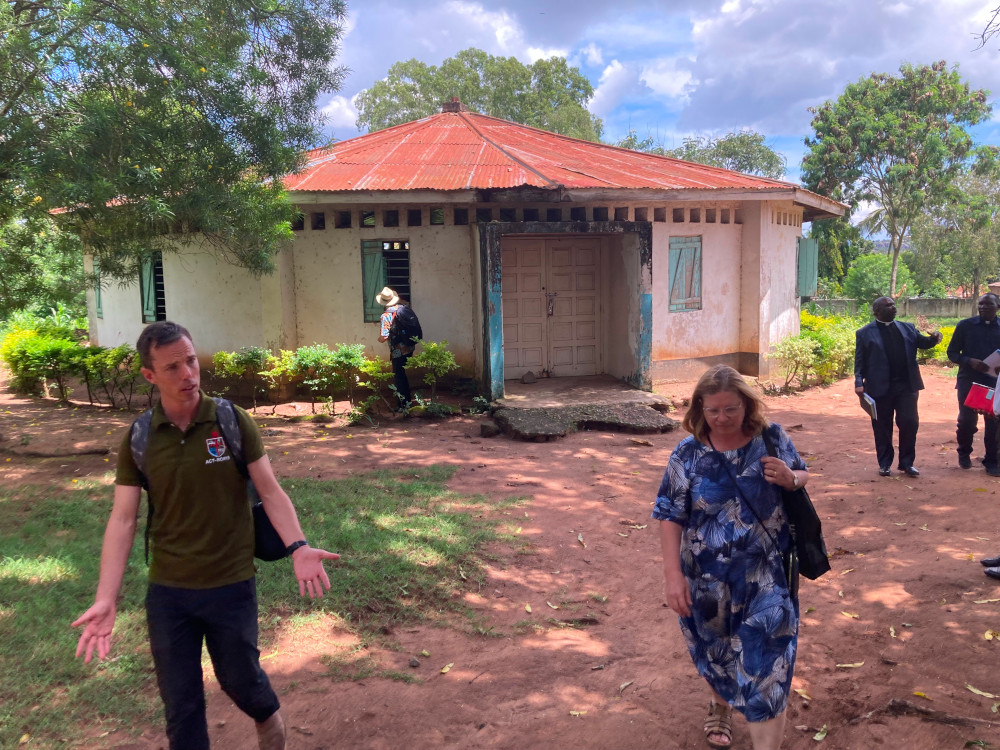
Another set of CMS missionaries, Grant and Allison Gallant, are headed for the Nyakato Bible School, one of three colleges suppoorted by Gafcon Tanzania. When I visited Nyakato in 2023 I learned that veteran missionary Helen Hoskins had been one of four single women running the college in its hey day – the Gallant’s will be part of revitalising the college. The night after my visit I wrote, “But then the troubles in the diocese started, and Hoskins was kicked out of the diocese. A brutally honest history of the Bible School we were given reads, ‘Diocese of Victoria Nyanza went through a challenge of leaders and disputes for over twenty five years. Also it led to the collapse of projects including Nyakato Bible School. Therefore, no priests and other servants have been prepared since that time…’”
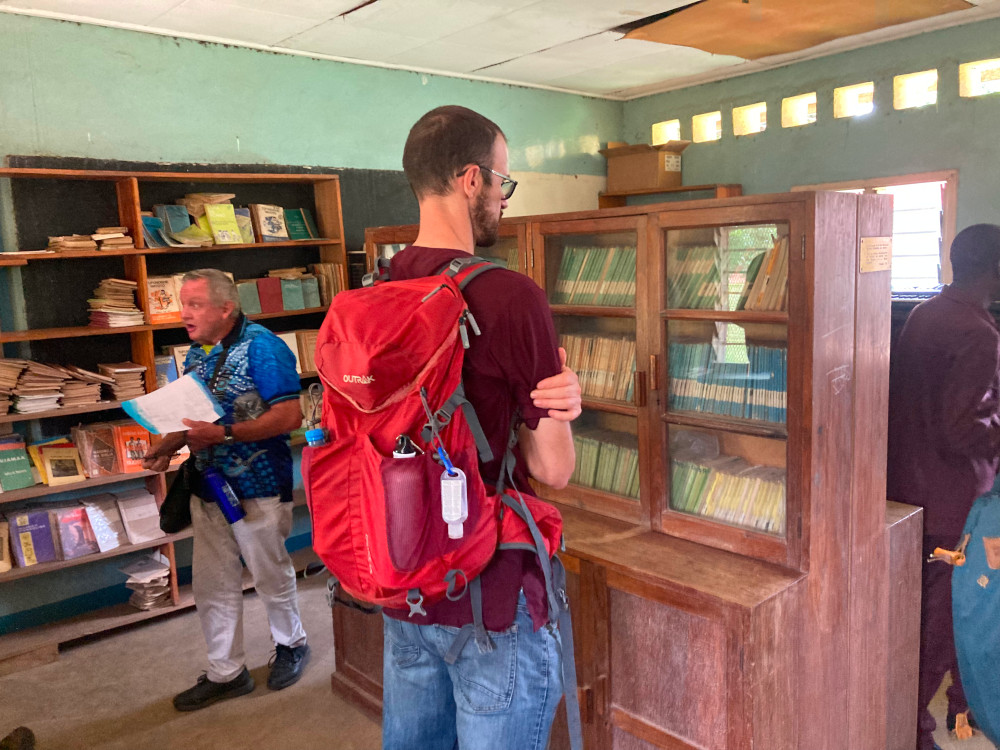
The needs for support was obvious. I wrote: “Nyakato has a library smaller than the one in my house, rundown buildings, but optimistic, happy students. This pic shows most of the whole library.”
“With the gifts that God has given us, I feel that we could follow pastors up as they’re trained and visit the villages,” Grant Gallant told the Synod via video. “And so we had a chat with the bishop and we were inspired by his vision to train pastors in his area. We’ve heard there’s 60 parishes with 250 churches and [while] there’s a leader leading each of those churches, only 60 of them have trained any training and there’s a great opportunity to be involved in training and helping and partnering with them … So we want to be part of that training, God willing and also discipling those pastors are already serving in the churches in the diocese.”
Visiting from Egypt, Mark Snada the academic dean of the Alexandra School of Theology decsribed the responsibility of being the only Anglican seminary teaching in Arabic. “Speaker 8 (30:51):
it’s putting on our shoulders the responsibility of training and discipling and teaching those who are going to teach others in the Arab world, especially with what the Lord is doing now in the Arab world, yes, it’s under hardship, it’s under pain and suffering, but yet it’s with glory. “
“The amount of testimonies that we hear about people who know the Lord, it gives us joy, but at the same time it gives us the responsibility that those people could be trained in our seminary at some point. So our vision is really to train women and men in ministry and to train men for ordination in the country. And this would go, so we teach in Chad, Tunis, Upper Egypt, Cairo and Alexandria. In Ethiopia we have locals who teach in their own languages, but sometimes we teach in Arabic and they translate for us. But now because of the relationship between Egypt and Ethiopia, we are not able to travel there.”
“Our vision really is to have to train women and men to be leaders in the church and to be able to teach a Christ-centered, gospel-centered message…
” Some of you may know that the Anglican church has maybe the fewest numbers among Christians who are minority in an Islamic country. Yet our seminary is attractive to many dominations and we have a cross from topic to Catholic to Pentecostal Baptist, Presbyterian abroad, evangelical, and of course Anglican. So we see it as an opportunity to teach reformed theology with orthodoxy and the reason that we are attractive to those people that a ST is known of, its biblical studies and biblical theology and solid teaching of the doctrine. And sadly, that the school is attractive to some people because the local church is not giving them enough teaching.”
The fourth theological school covered in the Synod briefing was St Patrick’s Theological College, both located in the Anglican Diocese of Toliara in southern Madagascar.. The Other cheek has a recent article, The drought that became a gospel flood, that outlines a story of the impact poverty and the impact of Christians working to help.
All of the Bible Schools mentioned , and others, have students who have been supported by Anglican Aid. https://anglicanaid.org.au/current-appeals/train-church-leaders/
Image: in need of repair – the Chapel at Nyakato Bible School