
Charles Brammall
Thanksgiving: More Than a Meal – In Fact, a Miracle
Thanksgiving has just been again (27 Nov), and yet again I failed to lead my family in acknowledging or celebrating it. Although next year I’m determined to. In fact, to make a big thing of it, “unAustralian” as that might be.
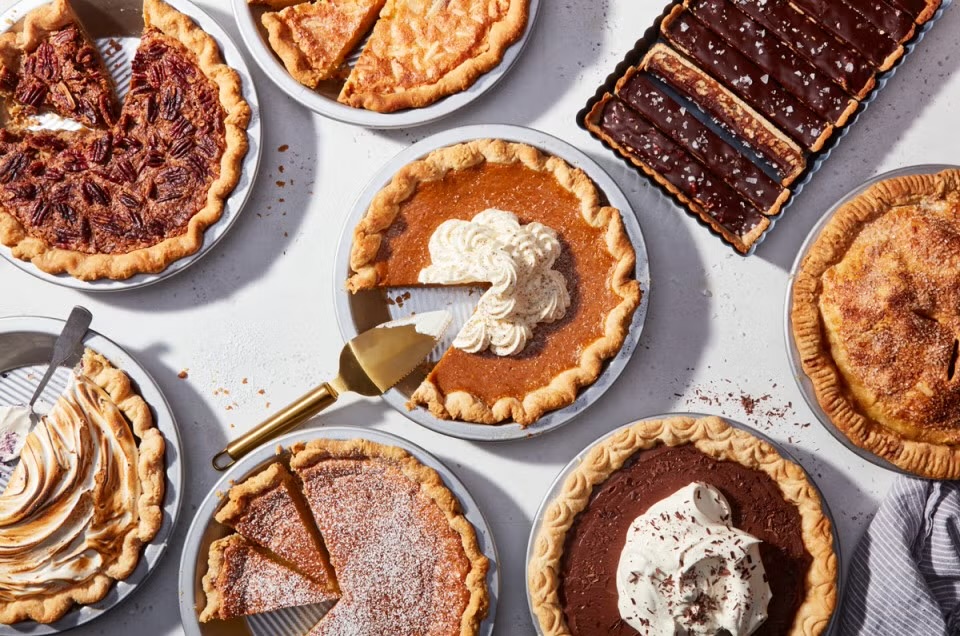
When I lived in Nuevo Mexico, USA, just near Area 51, my host mum made 12 different pies for Thanksgiving- pumpkin, pecan, sweet potato, cherry, apple, rhubarb, lemon… Just no meat! Crazy right? But it was all in thanksgiving to God.
When my real Dad had his first child (my lovely oldest brother- 85 this year), Dad (an unbeliever at that stage), felt overwhelmed with gratitude, but didn’t know who to thank. All he could think of was to knock on the door of the closest church, then Chatswood South Methodist, and ask the minister whom he should thank. This began his journey to Jesus, the next episode of which was going forward at Billy Graham in ‘59.
Thanksgiving.
I, too, was once profoundly overwhelmed by the need to give thanks. We had just had our first child, a boy, in the Birthing Centre at KGV at Camperdown. In those days, the quickest way to see photos you’d taken was to take them to a 1 hr developing place. So I raced up Missenden Rd in the car in the middle of the night from the hospital to a 25-hour photo place in King St, Newtown…
En route, I couldn’t help myself – I involuntarily rolled down the window, stuck my head out, and screamed into the night to anyone who’d hear, “I’ve just had a baby!” A couple of people clapped and cheered, bless them. Thanksgiving.
In the States, Thanksgiving is often assumed to be a festival about food. This is not an unreasonable conclusion, given the (often exploding) turkey of ridiculous size, the side dishes that proliferate exponentially, and the desserts that arrive in the plural as a matter of principle. Yet this excess sits on top of something older, firmer, and unmistakably theological: a deliberate, public act of gratitude to God for provision, survival, and grace.
At heart, Thanksgiving is a kind of domestic liturgy, informal, unshowy, and determinedly theistic. Which makes it mildly puzzling that Australia does not observe it. For a nation that enjoys a high standard of living, long political stability, and a Christian inheritance that still shapes its institutions, the lack of any fixed day set aside for collective thanksgiving feels less like neutrality and more like a habit we never quite formed.
Where It All Started
(And Why It Wasn’t Just For Fun)
The first Thanksgiving, usually dated to 1621 in Plymouth Colony, was not a cosy tableau of harmony and harvest. It followed months of sickness, uncertainty, hunger, and death. Roughly half the settlers did not survive their first winter.
When the harvest finally came, it was not assumed as a right. It was desperately and thankfully received as a blessing. Because in Christian terms, what is received is acknowledged.
The three-day feast shared between the English settlers and the indigenous Wampanoag people was explicitly religious in outlook. The former were well and truly Reformed Protestants, shaped by the Psalms, wary of excess, and not especially given to sentimentality. Gratitude for them was not a personality quirk, but a responsibility towards God, and a joyous privilege:
“Give thanks to the LORD, for he is good; his faithful love endures forever.”— Psalm 107:1.
Later Thanksgivings, declared by colonial governors and eventually by American presidents, kept this theological centre of gravity. George Washington called on citizens to recognise “the many signal favours of Almighty God”. Abraham Lincoln, in the middle of Civil War, urged the nation to give thanks, yes, but “with humble penitence for our national perverseness and disobedience”.
This is worth pausing over. Thanksgiving was never about congratulating ourselves for doing well:
Deut 8:15-18: “He brought water out of the flint rock for you. He fed you in the wilderness with manna… so that in the end he might cause you to prosper. You may say to yourself, ‘My power and my own ability have gained this wealth for me,’ but remember that the Lord your God gives you the power to gain wealth,…”
Early Thanksgivings were about naming dependence on God, often in circumstances that were anything but comfortable.
Why Gratitude Takes Work
(Especially Now)
Christian thanksgiving is not natural or a disposition; it is a decision and constant work. Scripture does not treat gratitude as optional, therapeutic, or dependent on life cooperating. Rather,
“Give thanks in everything; for this is God’s will for you in Christ Jesus.”— 1 Thess 5:18
This is not forced cheerfulness, nor a denial of suffering. It is a volitional decision to refuse confusing ease with grace. Thanksgiving, gratitude, and thankfulness train and equip us Christians, to recognise God as giver, even when the gift arrives tangled up with difficulty.
Modern Western societies find this hard going. We complain with fluency, consume with confidence, and express thanks in ways that are either vague or oddly directionless.
Australia adds its own complications. We are, by temperament and tradition, wary of overt gratitude. Praise risks embarrassment, and compliments feel excessive. Pointing out another person’s gifts can sound inflated, awkward, or suspiciously American. None of this is malicious. It is cultural. But it does shape us.
Let’s pause and pray about this:
Our gracious God and loving Heavenly Father,
Please help me to notice what I have and to say thank you, instinctively, honestly, and out loud. Help me to say “Thanks Lord” 100 times a day, as I recognise that every single thing comes from Your sovereignty.
For the sake of Jesus’ generous name,
Amen.
Dear Heavenly Father,
Please teach me to receive good things from others and You, without embarrassment. Please help me to respond with gratitude rather than silence. Help me to point out the good I see in others and in You, without embarrassment or discomfort.
I ask You for this in the generous name of Jesus, who always gave thanks to You His Father.
Amen.
Pie Theology
(More Serious Than It Sounds)
If gratitude is the heart of Thanksgiving, then pie is the supporting infrastructure. American Thanksgiving is notable for the sheer range of pies involved, as though restraint were never seriously considered.
Pumpkin pie is spiced, soft-set, and pretty much mandatory.
Pecan pie (pronounced Pee Can) is especially associated with the South. It is extremely sweet and best approached at one’s own risk.
Apple pie is older than the nation. It is solid, dependable, and quietly reassuring.
Sweet potato pie is particularly prominent within African-American traditions. It is fragrant and richly textured.
Cherry pie, blueberry pie, and chocolate silk pie appear according to family tradition and regional loyalties.
Pies matter because feasting matters. Christianity has never been embarrassed by abundance, provided it is received with thanks rather than entitlement. God’s dealings with humanity don’t end with a set of principles, a whimper, but with a bang- a meal, a banquet. With a feast, a wedding breakfast, an all-you-can-eat.
One Holiday, Many Tables, No Uniform
Thanksgiving is nationally shared, but locally expressed. In New England, the meal tends towards restraint and continuity: roast turkey, oyster stuffing, and real home-made cranberry sauce that tastes like it actually came from a plant!
In the Southern States (where I dwelt), the meal is more expansive: cornbread and black-eyed peas (yuck!), cornbread dressing, collard greens, ham alongside turkey, and desserts that suggest serious commitment.
In the Midwest, generosity and volume dominate. Hospitality is communicated through leftovers, distributed with quiet determination.
On the West Coast, one finds organic turkeys, vegan alternatives, and carefully chosen wines. All of this indicates that the host has given the matter some thought.
Despite these differences, the shape of the day remains consistent: gathering, gratitude, prayer, food, and remembrance.
Australia Missed the Memo
(And Why That Might Be on Us)
Australia does not observe Thanksgiving largely because it lacks the specific historical narrative that produced it. There was no Plymouth Rock, no founding story built around survival and harvest in the same way. But Christianity has never required identical histories in order to practise shared disciplines.
Australia has shown itself quite happy to import Halloween without its theology, Valentine’s Day without its martyr, and Black Friday without its self-awareness. Importing Thanksgiving, with its explicit acknowledgement of God, would be a net gain in our post-Christian, relativistic land.
And also, it seems to me that at times we conservative evangelical Christians in Australia can be slow to compliment and praise each other, and express gratitude. Negligent in encouraging others about their strengths and talents. We seem to feel uncomfortable doing it. I don’t know if it’s just a Sydney thing or not. (Now there’s a doctoral thesis just waiting to be written, right there.)
I suspect we are tempted to explain this absence as merely cultural, rather than to ask whether we have quietly accepted a more impoverished public theology than we realise. For those of us who take the trustworthiness and guidance of God’s Word seriously, Thanksgiving offers several things at once.
Firstly, it provides a public practice of gratitude. In a culture where dissatisfaction often passes for sophistication, thanksgiving stands out without needing to make a fuss.
Secondly, it offers an evangelistic table. Thanksgiving is not a programme or an event. It is a relational, friendly, loving meal. People may accept a dinner invitation long before they accept a church invitation. And if we pray that the conversation will turn to Jesus, it’s remarkable the number of times God will answer in the positive. He seems to like us praying that one.
Thirdly, it creates a counter-cultural witness. To stop, feast, and thank God aloud is a small but deliberate refusal to let secular forgetfulness set the tone. Powerful.
Fourthly, it serves as catechesis for families. Children learn gratitude through repetition, not abstraction. A yearly thanksgiving prayer forms habits that lectures rarely manage.
Australian awkwardness with Gratitude
Australians are not widely known for effusive gratitude. We thank service staff politely, often briefly, and then return to restraint. Praise is rationed. Compliments are given sparingly, if at all. We are quicker to notice pretension than excellence, quicker to deflate than to affirm.
It seems to me that conservative evangelicals are not immune to this, and at times may even baptise it with the language of humility. This too has consequences.
When gratitude is rare, gifts go unrecognised, and when praise is withheld, strengths remain unnamed. Over time, people begin to assume that what they contribute is either just obvious or insignificant. And our churches are not immune to this. Faithful service can pass without acknowledgment, and quiet competence is expected, not celebrated.
If we were to take God as a model for this, He can’t STOP singing the praises of His Son, and vice versa. The Spirit can’t stop Himself from drawing our attention to Jesus. And Jesus and the Father give the Spirit the respect He is due.
That is, within the Trinitarian Godhead, the ultimate, intimate relationship, there is esteem, admiration, and honouring. Praise, acknowledgement, and thanksgiving. Complimenting, respecting, and recognising each other’s strengths. Revering, praising, and gratitude. If ever there is a relationship to model ours after, it is this one, the eternal, perfect relationship. The true “Holy Family”!
If gratitude were common, we would feel motivated and inspired to use our strengths for the Kingdom. When praise is frequent, our abilities seem to be identified. Over time, we begin to learn that what we contribute is both important for the Kingdom and appreciated.
And as churches, we can enact this. I, you, we, can enact it by modelling it for others. (Be just a little bit American.) We can have the privilege and joy of acknowledging others’ faithfulness.
You see, what gifts do I aspire to? The brilliant administrator who can organise a silky smooth weekend away with their hands tied behind my back. The gun preacher or MC, or the winsome, disarming evangelist. The virtuoso drummer or singer, or the oh-so-cool youth group leader who’s also a brilliant Bible teacher. The incisive, nuanced, empathic small group leader…
… I think the most impressive gift practised in my local church is a middle-aged couple who voluntarily and anonymously clean the toilets each week. Several of us have discovered their secret service, and now we thank them frequently, and esteem, admire and respect them even more. Consequently, they feel encouraged, inspired, and motivated. Needed and appreciated. It’s a win win you see: Thanksgiving.
So, what about we bring it down here next year? It’d be Godly to do so. Christlike. Spiritual. Trinitarian in fact. And cross-shaped. We feast on the spiritual food of life, death, resurrection and the ascended reign of Jesus. And it would never occur to us not to give thanks for that.
So let’s give extravagant, lavish, well-deserved thanks on Nov 27th next year, to “the Father of heavenly lights… from whom every good and perfect gift comes down from above…”- Jam 1:26-17. I, for one, need to ask God for His help in this. I know my heart is not as generous as He (and I) would like it to be.
Prayer:
Our gracious God and loving Heavenly Father,
Please forgive me for not leading my family in acknowledging and celebrating Your generosity to me again this year. For passing up this inspired opportunity to celebrate Thanksgiving. Please help my family to be encouraged, inspired and motivated to make a big thing of It next year.
In Jesus’ bless’d, gifted Name,
Amen
Dear Father,
Please help us to invite people to Thanksgiving next year who are unhappy, lonely, or unwell. People who have disabilities, are marginalised, or are unpopular.
And please help us to use it as a wise, loving, and sensitive opportunity to introduce them to Jesus, the greatest gift-giver ever.
For the sake of Jesus’ generous, giving, and grateful name,
Amen
(I’ll be waiting for my invitation to Thanksgiving dinner at your place next year – as long as at least one of the pies is meat!)”