

By Rose McCann
Writing for The Sydney Morning Herald, the biographer Mark McGinness concluded that Charles Spencer’s Swan Song: Diana, My Sister (2026) is “a plucky and plausible achievement” and a “fascinating” younger brother’s tribute written without a ghost. I agree with that verdict. He also said, “the Earl writes vividly and well”. This is true too, though hardly surprising from an Oxford-educated historian and journalist who has published nine books. Among many questions left with the reader, Spencer’s account of his sister’s life raises one important one for Christians. How can someone be seen by so many as a gift, and even a mirror to many vastly different others, while still suffering so deeply herself?
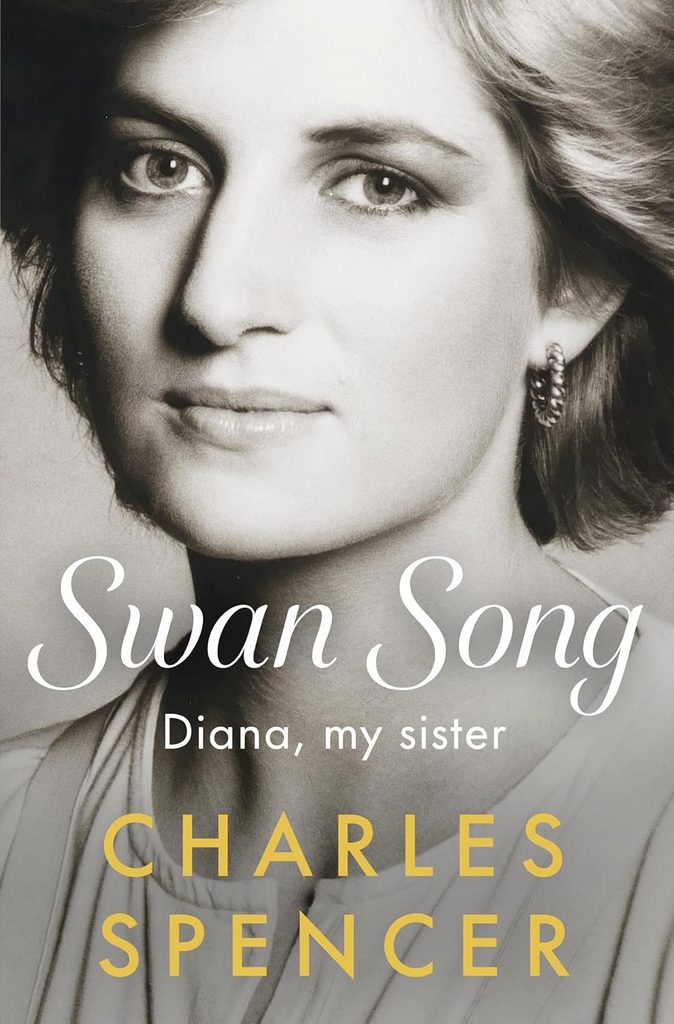
For decades Diana has been read in competing ways. Progressive readings cast her as a feminist and political rebel against a cold, patriarchal and self-focused royal institution. Unsympathetic palace defences painted her as unstable and unmanageable. And then there is Spencer, perhaps the clearest exponent of a third reading, a therapeutic one, which grounds her adult behaviour in childhood trauma. It explains a great deal. But each of these accounts offers a single key, and none quite explains a woman who gave so much to others while still carrying her own pain. Christians have an old way of holding those together: a fallen world explains the suffering, and common grace explains the gift. Only an account that holds both can do justice to the Diana in this book.
Swan Song is built around the writing of Spencer’s 1997 Westminster Abbey eulogy, which Spencer says he drafted in a single 90-minute burst and whose impact was instant and global. It was, he says, a public answer to the institution that tried to diminish Diana after her separation and divorce. He attributes the cruelty she endured from relatives to royal envy and wounded egos from her enormous public popularity. And, above all, to the obsessive manipulation of the media.
That treatment began, Spencer argues, with a miscalculation. Taking us back to their shared early childhood, he dismantles the myth of “Shy Di”, the bashful girl the world saw in early TV interviews. Her polite exterior earned her the family nickname “Duchess”. But behind it, he insists, was a scrappy, feisty child. Both siblings were brought up to be kind and obedient, and never to be rude. But their aristocratic upbringing (from both parents, he reckons) also taught a counter-rule. If someone was mean or cruel, you were morally bound to resist; to fight back.
The royal household, Spencer says, believed it was acquiring someone meek and easily managed. But the Diana he knew so well from his earliest memories never was, and never could be, “biddable”.
Spencer describes a childhood marked by their parents’ bitter divorce, and the contrast in how he and Diana experienced it. He was three when their mother left, barely remembered her, and recalls the early years as happy. Diana was six. She later called that day “the Great Sadness”. With a father who was kind but distant, the children mostly lived among servants and nannies, including one who was physically abusive.
Both were then sent to boarding school at very young ages: Spencer at eight, Diana at nine. The shadow of his previous memoir, A Very Private School, lies over this book. There he told of abuse at the age of eleven by a young female member of staff over five months. He told no one at the time, and in an affection-starved all-male environment he initially mistook her attention for the only warmth on offer. His older sisters, his seven children, and his nephews William and Harry didn’t know until he published it in 2024.
Spencer also gives a revealing window into Diana’s school years. Reading her report cards, he reflects on what looks in hindsight like severe, undiagnosed ADHD and dyslexia. Her reports were full of complaints about restlessness and a short attention span, and teachers called her “defeatist” when she faced subjects she found impenetrable. He argues that the private schools of the 1960s and 70s offered her no help and simply chided her for shortcomings that weren’t her fault. Diana took her poor results to heart, carrying a lifelong sense of worthlessness. After his own severe ADHD diagnosis, he came to believe that they both also suffered from rejection sensitive dysphoria (RSD), intense emotional pain at perceived criticism or rejection. (RSD is not a formal diagnosis, and these are Spencer’s retrospective readings rather than established facts.)
The fallout went beyond the classroom. Spencer also describes the family’s breakdown after their father’s catastrophic stroke, two years after his remarriage. He describes his stepmother as a nightmare, cruel and hostile, and his portrait of her is more detailed than any other criticism in the book. From then on, he says, she took charge of everything, selling off about a fifth of the Althorp estate’s historic artwork. He alleges she even tried to stop the Spencer children from visiting their father in hospital when he was dying. By the time Diana died in 1997, Spencer, then 33, had lost his father too, and was carrying a lifetime of accumulated family grief and trauma.
Spencer doesn’t present his beloved sister as a plaster saint. He recounts three flashes of temper: a childhood kick when he was on a bicycle, a slap to their father on discovering his secret remarriage, and later a trip that sent their stepmother down the stairs at Althorp after an argument. He reads these as the release of a lifetime of suppressed hurt, later compounded by an unloving marriage and, he suggests, undiagnosed RSD. Therapeutic language explains such moments well. What it can’t do is account for the other side of the ledger, the gift.
Christians read this kind of damage as the marks of a fallen world, in which children are failed by the very people meant to protect them. Spencer notes that her trust, damaged from the start by her parents’ divorce and her schooling, narrowed over the years. Despite a wide circle of friends, she came to trust fewer and fewer of them, eventually including her own siblings. Spencer says her sense of isolation returned when her own sons were sent away to boarding school, reviving the memory of how awful it had been for her at the same age.
Spencer argues that the media treated her from the start as a commodity and cash cow, and that her royal marriage treated her instrumentally. He says she endured regular seasons of suicidal thoughts, and that her love for her young sons helped her through. He describes her anorexia and bulimia, fought largely alone. Yet through what came to be called “The Diana Effect”, her openness reduced public shame and gave millions permission to speak about eating disorders. For a Christian reader, it is all a sobering reminder that wealth, status and global adoration are no help to a soul in despair.
Spencer argues her woundedness became the engine of her public appeal. Because she was so deeply hurt herself, she sided instinctively with the outcast, the ill, the poor and children. Having known isolation at home, she recognised it in others. Spencer suggests that what medicine would call a disorder was the source of her immense, unfiltered empathy, and that it explains the unprecedented mass grief at her funeral. Spencer also stresses her genius with children, and her classless ability to connect within moments with people of every kind.
A secular reader can explain that empathy by her wounds alone. A Christian reader will want to add something: common grace. Spencer says Diana was raised with daily prayer and weekly church, and she kept some faith as an adult, though it was thin and not intellectually or overtly developed. Yet God often shows kindness to a hurting world through people like this. Her instinctive siding with people in crisis, shaking hands with AIDS patients, embracing lepers, walking through active minefields, reflects a Creator who defends the vulnerable, working through a woman who knew her own brokenness. Wounds explain how she saw. They don’t explain why so many of the world’s most vulnerable were met with kindness through her.
Spencer’s own narrative belongs to the modern search for psychological healing. His calm, emotionally intelligent manner in recent media interviews suggests how much he has benefited from counselling. He has clearly used it to name and understand his traumas and their effects. Christians have a category for this too. Common grace is not only the empathy of a wounded princess. It is also the skill of a good counsellor, whatever their own beliefs, and the courage that let a man break decades of silence about his own abuse.
I don’t want to understate the good of therapy. Naming a wound is a real kindness. It is important information, and Christians can receive it with thanks. But gift and limits sit together, and the book shows both. It can diagnose and validate, and it can say where a hurt came from. It has nothing to say to a sufferer who wants to know what the suffering is *for*. Christians have an old language for that: lament, the honest cry addressed to someone who they trust hears. Therapy gives you the words to describe pain. Lament gives you somewhere to bring it.
His stepmother is the clearest case. Even more than King Charles, she is the one person Spencer criticises most, and he does so in greater detail than anyone else. I don’t doubt his pain, and her behaviour as he describes it was plainly abusive and damaging. But at times the portrait reads as score-settling, as if establishing what was done to him and his sisters were the end of the story.
In interviews, he repeatedly says he doesn’t want to discuss others’ motives. There are probably several for writing this book now. Swan Song is, at its core, a brother’s attempt to explain his love for his sister, alongside his grief and anger at the circumstances of her death. It is remarkable that he could write so loving a book about a relationship he tactfully describes as complicated and often distant. The distance was partly circumstance and partly her design. Diana frequently initiated periods of the silent treatment, freezing him out as were many others she felt had let her down. Yet his devotion to her memory endured, a reminder of how sibling love can survive the most fractured circumstances. Seen this way, the book is itself a gift. A wounded brother using his hurt to write the book he believed she would’ve wanted him to, when he was able.
Swan Song is a compelling and often sad read. It contrasts the rigid, institutional “duty” of the court with Diana’s raw empathy for people in need. For anyone interested in family legacy, sibling bonds and psychological trauma, it is a powerful case study, and it leaves readers with big questions about suffering and healing.
Image: Charles Spencer with his sister Diana and nanny Mary Clarke in 1972. Image Credit: Earl Spencer